
Journal · autumn
Squash and Pumpkins in October: Which to Choose, Cook and Store
On this page9 sections
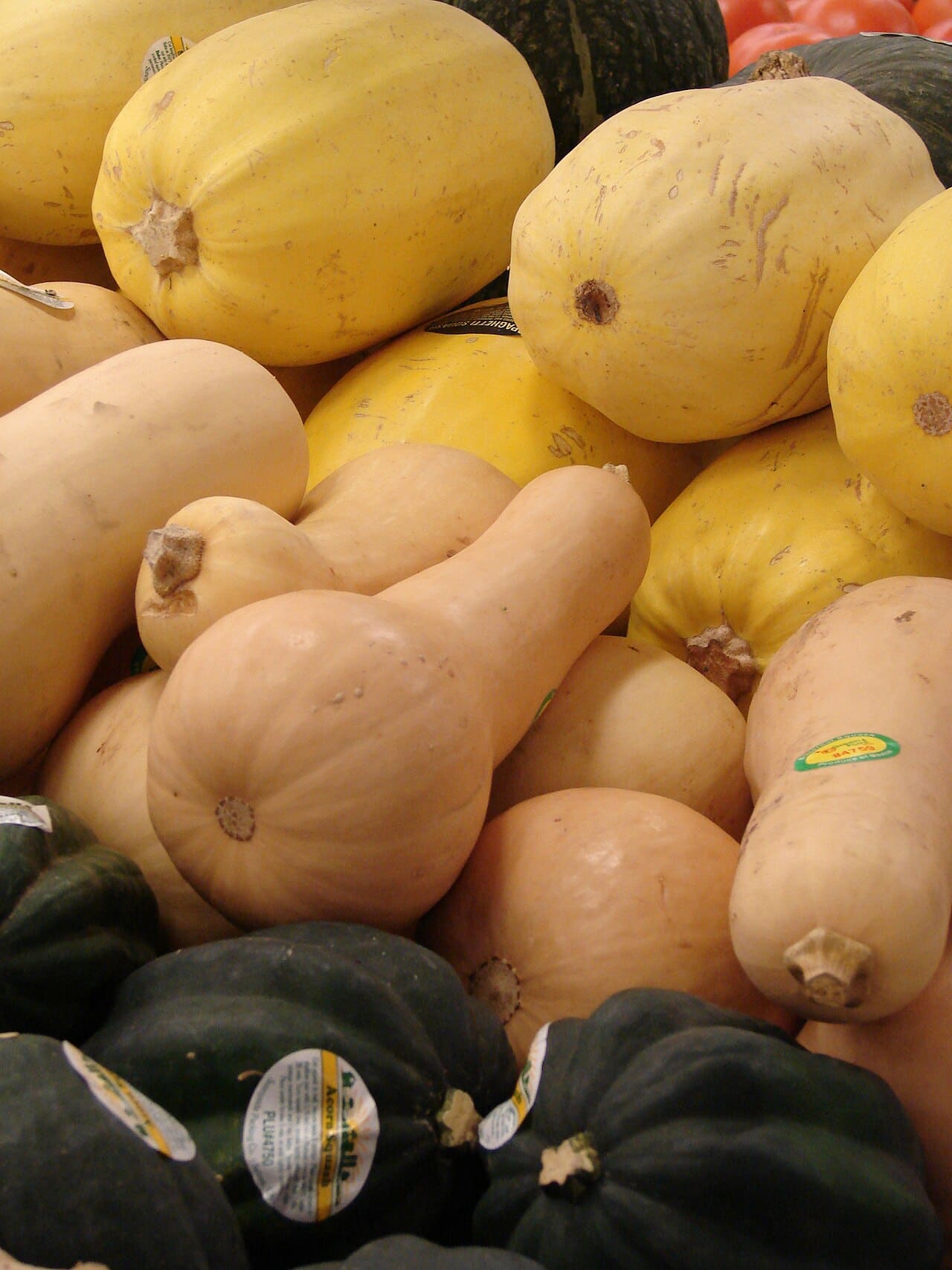
The heaps arrive at farm gates and market stalls at the end of September and stay until the frosts: grey-blue Crown Prince, dusty orange onion squash, butternuts the colour of pale toast, and great ribbed carving pumpkins stacked for Hallowe’en. October is the month when the squash harvest is cured, sorted and on sale, and there is no better time to cook with it.
The difference between a good squash dinner and a disappointing one is mostly in the choice of variety. A big orange carving pumpkin and a small dense Uchiki Kuri belong to the same family but behave very differently in the oven.
Which squash to cook, and which to carve
Squash and pumpkins are all cucurbits, mostly from three species: Cucurbita maxima, C. moschata and C. pepo. “Pumpkin” and “squash” are names of habit rather than botany, so it is more useful to know a handful of varieties by sight.
| Variety | Look | Flesh and best use |
|---|---|---|
| Crown Prince | Flattened, steel-blue skin | Dense, sweet, deep orange; roasting, soups, mash |
| Uchiki Kuri (red onion squash) | Teardrop shape, bright red-orange | Nutty, dry; roast with the skin on |
| Butternut | Pale tan, bottle-shaped | Smooth, sweet; soups, curries, roasting |
| Acorn | Small, dark green, deeply ribbed | Mild; halve and bake with a stuffing |
| Delicata | Cream with green stripes | Thin edible skin; slice into rings and roast |
| Spaghetti squash | Pale yellow, oval | Flesh pulls into strands once baked |
| Turk’s Turban | Turban-shaped, multicoloured | Mostly decorative; edible but variable |
| Carving pumpkin | Large, round, bright orange | Thin, watery flesh; soup or purée only |
Crown Prince is the variety most often recommended by cooks for flavour, and it also stores well. Uchiki Kuri is the other easy choice, especially for anyone who dislikes peeling: its skin softens completely when roasted. Butternut is the everyday supermarket squash for good reason, consistent and easy to prepare.
Cooking plant-based with squash
Squash is one of the most useful vegetables in a plant-based kitchen because it brings sweetness, body and colour without needing butter or cream. Roasting is the first thing to master. Cut into wedges or chunks, toss with a little rapeseed or olive oil, salt and a few sprigs of thyme, and roast at around 200°C until the edges caramelise. That tray of squash then becomes a dozen different meals.
Soups are the obvious next step: roasted squash blended with onion, garlic and vegetable stock, sharpened with a little lemon or a spoonful of miso, and finished with toasted seeds. A squash and red lentil dal with ginger and cumin makes a filling midweek dinner. Squash, chickpeas and preserved lemon in a slow-cooked tagine is good the next day too. Halved acorn squash can be stuffed with cooked lentils, mushrooms, walnuts and herbs and baked until tender. A risotto with roasted squash stirred through at the end needs only vegetable stock, white wine if you like, and olive oil in place of butter and Parmesan.
Herbs make a bigger difference than people expect. Thyme, sage and rosemary are the classic partners; chilli, smoked paprika and cumin take squash in a different direction entirely. Our page on thyme substitutes helps on the evenings when the pot on the windowsill has been picked bare.
The seeds are worth saving. Rinsed, dried, oiled and roasted, they make a snack or a crunchy topping for soup.
Preparing a whole squash without a struggle
The hardest part of cooking squash is often getting into it. Dense varieties such as Crown Prince can be genuinely tough, and the usual advice from cookery writers is about safety as much as convenience.
Start with a large, heavy knife and a board that will not slide, with a damp cloth underneath it. Cut a thin slice off one side so the squash sits flat rather than rolling, then cut downwards in stages rather than trying to force the blade through in one go. For butternut, separate the neck from the bulbous base first: the neck is solid flesh and easy to peel and dice, while the base holds the seeds. A sturdy metal spoon scrapes out seeds and fibres more cleanly than a knife.
Peeling is optional more often than people think. The skin of Uchiki Kuri and delicata softens completely in the oven, and butternut skin becomes tender enough to eat when roasted in wedges. For soups and purées the flesh can simply be scooped away from the skin after roasting, which avoids peeling altogether. Crown Prince skin is thicker and is usually best removed, before or after cooking.
One squash, several meals
A large squash is often more than one meal’s worth, which is part of its appeal. Roasting the whole thing at once, then using it in different ways across the week, saves both oven time and effort.
On the first evening, wedges straight from the oven go alongside lentils, greens and a sharp dressing. The next day, a few cupfuls of roasted flesh blended with stock become soup. Mashed roasted squash folds into a risotto, spreads on toast with chilli and lemon, or thickens a bean stew. Small cubes keep their shape in a grain salad with toasted seeds, rocket and a mustard dressing. Even the roasted skin of a thin-skinned variety can be crisped again in a hot pan.
Roasted squash keeps in a covered container in the fridge for a few days, and purée freezes well in portions for soups and sauces later in the winter. A carving pumpkin can follow the same route after the lantern has done its job, as long as it was carved on the day and has not sat out for days with a candle inside; a carved pumpkin left on a doorstep soon starts to go soft and mouldy and is better sent to the compost.
Pumpkins and Hallowe’en waste
Carving pumpkins are grown in vast numbers in Britain for one evening at the end of October, and a large share of the flesh scooped out of them is thrown away. Environmental charities have run campaigns in recent years encouraging people to eat what they carve, and the simplest response is to save the scooped-out flesh and seeds on the day.
The flesh from inside a lantern makes perfectly good soup once it is simmered with onion, a little curry paste and coconut milk, or roasted until some of its water has cooked off. The seeds roast well. What cannot be eaten can go to the compost heap or a food waste collection rather than general rubbish.
How to cure and store squash
Squash keeps for months if it is cured and stored well, which is a large part of why it was such an important winter food before refrigeration. The RHS advice for pumpkins is to let the fruit mature and colour on the plant, harvest before the first frost with a good length of stalk attached, and then cure the fruit in the sun for seven to ten days so that the skin hardens. A greenhouse or a sunny windowsill works when the weather is poor.
After curing, store squash somewhere well ventilated at around 10 to 15°C, with the fruits not touching each other. Under those conditions the RHS says pumpkins should keep for at least three months and up to six. A cool spare room, a shelf in a frost-free shed or the top of a wardrobe often works better than a warm kitchen. Check them every few weeks and use any that show soft spots first.
Bought squash has usually already been cured. Keep it whole in a cool, dry place; an uncut squash does not need the fridge. Once cut, wrap the remaining piece and keep it in the fridge for a few days, or roast and freeze it in portions.
Some varieties store better than others. Crown Prince and butternut are reliable keepers; delicata and acorn are better eaten within a few weeks.
A squash on a kitchen shelf is not idle, either. Through the winter its flesh tends to become slightly sweeter and drier as some of the water evaporates through the skin, which is why many cooks find a Crown Prince eaten in January better than one cut in October. A light dusting of mould on the stalk is usually harmless, but any soft or weeping patch on the body means the squash should be used straight away, cutting generously around the damaged part.
Picking your own around Norfolk
Pick-your-own pumpkin patches have become a regular part of October in Norfolk and across East Anglia, usually opening for a few weeks before Hallowe’en. Many are on working farms that also grow strawberries or sunflowers earlier in the year, and they often sell eating squash alongside the carving pumpkins.
Opening days, booking rules and prices change every season, so check the farm’s own website or social media before setting out. Weekends in the last fortnight of October are often the busiest, and some farms ask visitors to book a time slot. A midweek visit early in the month usually means a wider choice and muddier boots.
A practical point that is easy to forget: carving pumpkins and eating squash are often sold side by side in a pick-your-own field, and they do not taste the same. Picking one of each, a big one for the lantern and a Crown Prince or onion squash for the soup, makes the most of the trip and avoids an evening of watery pumpkin purée.
For anyone growing their own, the RHS page on growing squash covers the season from sowing indoors in April to harvest. Squash needs a lot of space, rich soil and warmth, but a single plant of a compact variety can produce several fruits in a good summer.
A word of caution on bitter squash
One safety point applies to every kind of squash, courgette and pumpkin. Plants in this family can occasionally produce fruit with high levels of cucurbitacins, natural compounds that taste strongly bitter and can cause stomach upset. It is rare in shop-bought squash, and more likely in plants grown from saved seed that may have crossed with ornamental gourds. If a piece of squash tastes unusually bitter, spit it out and throw the rest away rather than cooking on regardless.
Ornamental gourds sold for autumn displays are not meant to be eaten at all.
Squash on the menu in Norwich
October menus in Norwich tend to fill up with squash as well: in soups, risottos, curries and roasted on the side of almost everything. Our guide to vegan dinner in Norwich lists places by type, and the seasonal calendar on what’s in season shows what else arrives in the same weeks, from leeks and kale to the last of the apples. One small aside from the calendar: in a mild year the last courgettes and the first winter squash can share a stall, and the courgette is itself a summer squash, simply picked young instead of being left to ripen and harden.
Worth trying this month, if only once: a Crown Prince cut into thick wedges, skin left on, roasted with thyme and garlic, then served with a spoonful of tahini thinned with lemon juice.
Questions
Can a carving pumpkin be eaten?
Yes, the flesh of a carving pumpkin is edible, but varieties bred for carving are chosen for size, shape and thin walls rather than flavour, so the flesh tends to be watery and bland. It works best in soups, spiced purées and curries where other ingredients carry the flavour. For roasting or baking, a dense eating squash such as Crown Prince or butternut gives far better results.
How long do squash and pumpkins keep?
After curing in the sun for a week or so to harden the skin, the RHS says pumpkins should keep for at least three months, and up to six in ideal conditions, stored somewhere well ventilated at 10 to 15°C with the fruits not touching. Thick-skinned squash such as Crown Prince and butternut keep longest; thin-skinned types such as delicata are best eaten within a few weeks.
Why does my squash taste bitter?
Strong bitterness in squash, courgettes or pumpkins can come from natural compounds called cucurbitacins, which are usually bred out of edible varieties but can occasionally reappear, especially in plants grown from saved seed that may have crossed with ornamental gourds. A squash that tastes noticeably bitter should not be eaten; spit out the mouthful and throw the rest away.
Are pumpkin seeds worth roasting?
Yes. Rinse the seeds to remove the stringy pulp, dry them well on a tea towel, toss them with a little oil and salt, and roast at around 160 to 180°C until crisp and lightly golden, stirring once or twice. Seeds from smaller eating squash tend to be tenderer than those from big carving pumpkins, which can be tough-shelled.