
Wild thyme field guide
Thyme Substitutes: Oregano, Marjoram, Savory and Swaps That Work
Halfway through a pan of onions for a lentil stew, with the stock already measured, is when most people discover the thyme jar holds nothing but a few grey stalks. The good news is that thyme sits in a large family of Mediterranean herbs, and several of its relatives taste close enough to carry a dish without anyone noticing the change.
The swaps below are grouped by what they do best. Some are near-identical in flavour, some only work in long-cooked food, and one or two are better avoided unless there is nothing else.
The first swap: thyme for thyme
Before reaching for anything else, check whether the cupboard holds thyme in the other form. Dried thyme stands in for fresh, and fresh for dried, more convincingly than any other herb can.
The standard conversion is roughly one to three: one teaspoon of dried thyme does the work of one tablespoon of fresh leaves. Dried herbs are more concentrated because the water has been removed, so a recipe written for fresh needs only a third of the amount in dried form. Going the other way, triple the quantity.
Timing changes a little. Dried thyme does best added early, with the onions or the liquid, so it has time to soften and give up its flavour. Fresh leaves can go in early for a deep, background warmth or in the last ten minutes for a brighter, greener note. A recipe that says “a few sprigs” usually means whole stems tied together or dropped into a pot and fished out later; a level teaspoon of dried leaves in a small muslin bag or tea infuser gives a similar effect.
If the only thyme to hand is lemon thyme, it can replace common thyme in most savoury cooking, with a citrus lift that suits beans, mushrooms and roasted roots. It is less successful in a rich red-wine stew. The lemon thyme page covers how it differs in the pan.
Oregano and marjoram
These two are the most useful thyme substitutes in a British kitchen because nearly every supermarket sells at least one of them, dried or fresh, all year round.
Oregano, Origanum vulgare, is the bolder of the pair. Its flavour is peppery and slightly bitter, with a warmth that comes from many of the same aromatic compounds found in thyme. It suits tomato sauces, roasted peppers and aubergines, baked beans made from scratch, and anything with olive oil and garlic. Swap it for thyme in roughly equal amounts, perhaps a touch less in delicate dishes. Dried oregano is often stronger than fresh, which is unusual among herbs, so start low.
Marjoram, Origanum majorana, is sweeter, softer and more floral. It is the better thyme replacement in soups, egg dishes, mushroom sauces and stuffings, where oregano can feel heavy. Use the same amount as the thyme called for. Fresh marjoram loses its scent quickly in heat, so add it towards the end of cooking.
A small botanical aside: the plant that grows wild on chalk downs across southern England and is sold as “wild marjoram” is in fact Origanum vulgare, the same species as culinary oregano. Grown in a cool British summer it tends to be milder than the oregano in a jar from southern Europe, which is one reason why recipes written in Greece or Italy can taste different when cooked here with homegrown herbs.
Savory, summer and winter
If one herb deserves to be better known as a thyme substitute, it is savory.
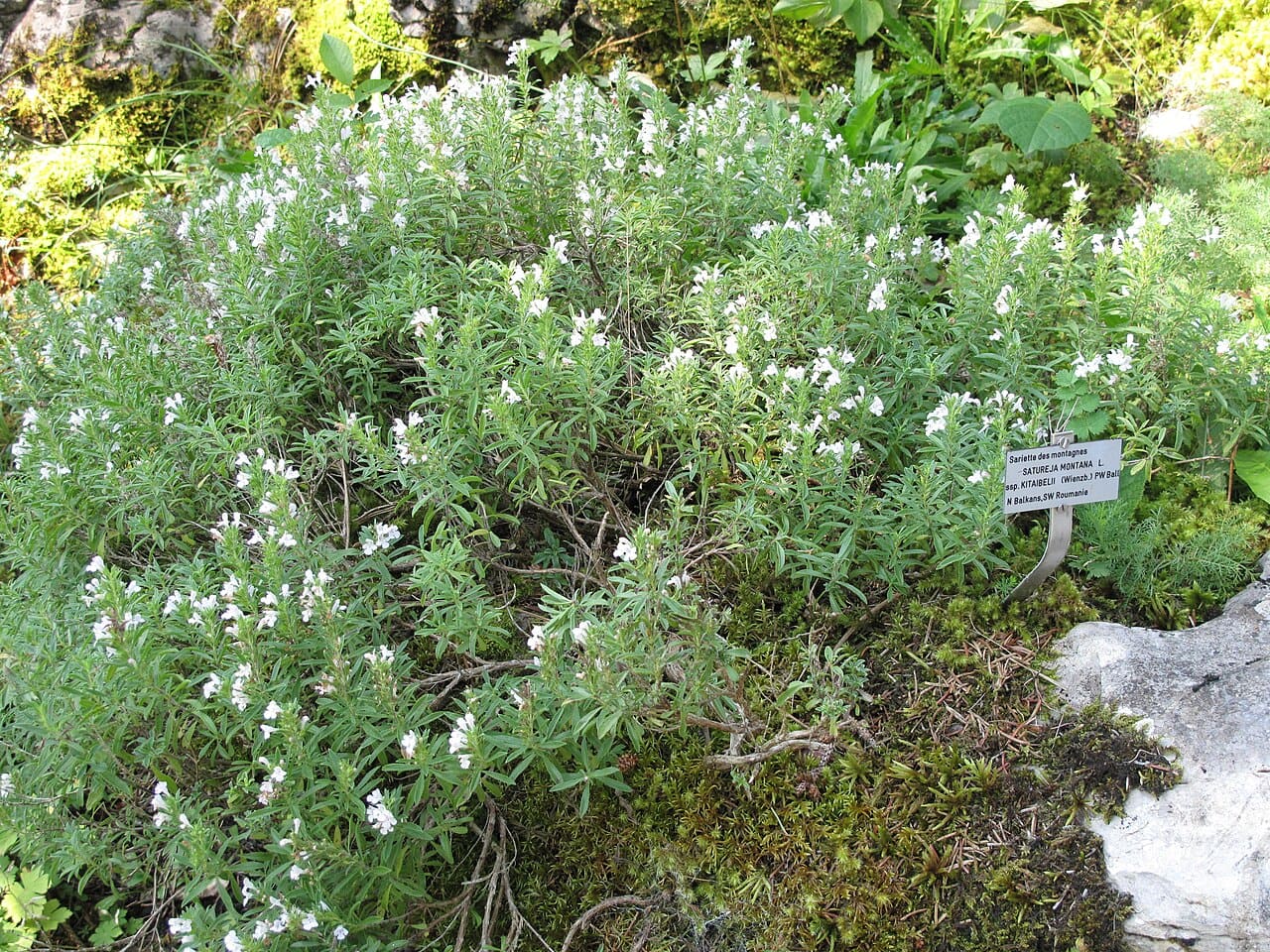
Summer savory, Satureja hortensis, is an annual with a peppery, thyme-like flavour that is a little sharper and more resinous. Winter savory, Satureja montana, is a woody perennial with a stronger, harsher taste that mellows in long cooking. Both have a traditional association with beans and pulses in European cooking, and both work in almost any recipe where thyme would.
For most dishes, savory replaces thyme one for one. Winter savory is better in slow-cooked stews and broad bean dishes; summer savory suits lighter food and dressings. Dried savory is sold by some spice merchants and specialist shops, though it is harder to find than oregano. Gardeners who grow it often find winter savory as easy as thyme itself, with the same need for sun and sharp drainage.
Blends: herbes de Provence and za’atar
Mixed blends are a practical answer because many of them already contain thyme or a close cousin.
Herbes de Provence is the obvious one. Recipes for the blend vary, but thyme, savory, rosemary and oregano or marjoram are the usual base, and some versions add lavender. It works as a thyme substitute in roasted vegetables, white bean casseroles, tomato dishes and marinades. Use slightly less blend than the thyme specified, because rosemary and lavender are both assertive. If the jar smells strongly floral, it probably has a lot of lavender, and that is not always welcome in a stew.
Za’atar is two things: a name used for certain wild thyme-like and oregano-like herbs in the eastern Mediterranean, and a ready-made blend that combines those dried herbs with sumac, toasted sesame seeds and salt. The blend is tangy and nutty as well as herbal, so it changes a dish more than a straight herb swap would. It is excellent scattered over roasted chickpeas, flatbreads, labneh-style yoghurt or grilled vegetables, and reasonable in a dressing. It is less suited to stocks and gravies. Because most blends contain salt, taste before seasoning.
Rosemary, sage and bay: a lighter hand
Rosemary, sage and bay are not close relatives in flavour, but they can fill thyme’s role in particular dishes if used carefully.
Rosemary is far more forceful than thyme. In a tray of roast potatoes, a white bean and garlic stew or a loaf of focaccia it is a natural fit, but use about half the thyme quantity and chop it finely, since the needles stay tough unless they cook for a long time. In a quick sauce or anything delicate it tends to take over.
Sage brings a soft, earthy bitterness that works in squash dishes, onion-heavy stuffings and with brown butter. Again, use less than the thyme quantity, and add it earlier rather than later; raw sage can taste dusty.
Bay is the background herb. A bay leaf dropped into a stock, a pan of lentils or a pot of beans gives the same quiet depth that a bundle of thyme sprigs would, without the peppery note. It does not replace thyme in dishes where the herb is tasted directly, but in a long-simmered pot nobody will miss the swap. Remove the leaf before serving.
Herbs that rarely work in thyme’s place
Some herbs look like obvious stand-ins because they sit next to thyme on the supermarket shelf, yet they pull a dish in a different direction.
Basil is the most common mistake. Its sweet, slightly aniseed flavour belongs to the tomato and summer-vegetable side of cooking, and it fades almost completely in a long simmer, so a stew that relied on thyme for warmth ends up tasting of very little. Tarragon has a stronger aniseed note again and changes the whole character of a sauce. Dill and fennel fronds are fresh and grassy, good with potatoes, beetroot and cucumber, but they have none of thyme’s peppery depth.
Mint deserves a separate word. A small amount of dried mint is used alongside thyme-like herbs in parts of the eastern Mediterranean, and in a bean or lentil dish it can add something interesting. On its own, as a straight replacement, it reads as cooling and sweet, which is the opposite of what thyme brings to a pan.
Parsley is neutral rather than wrong. It adds colour and freshness without competing, and in a recipe where thyme plays only a minor part, chopped parsley stirred in at the end is often enough to stop the dish tasting as though something is missing. It will not carry a recipe built around thyme, such as a herb crust or a slow-cooked bean pot, where the herb is a main flavour.
Dried mixed herbs from a supermarket jar are a gamble. Many contain thyme alongside sage, marjoram and parsley, and they can work in stuffings and casseroles, but the proportions vary between brands and the contents are often old and dusty by the time the jar is half used. Smell before measuring, and treat the jar as a last resort rather than a first choice.
Side by side
The table gives starting points for replacing one teaspoon of dried thyme. Treat them as a first measure: you can always add more herb, but you cannot take it out again.
| Substitute | Flavour compared with thyme | Amount for 1 tsp dried thyme | Works best in |
|---|---|---|---|
| Fresh thyme | Same herb, greener and brighter | About 1 tbsp leaves | Everything |
| Savory (summer or winter) | Very close, a little sharper | 1 tsp dried | Beans, stews, dressings |
| Marjoram | Sweeter and gentler | 1 tsp dried | Soups, eggs, mushrooms |
| Oregano | Bolder and more peppery | 1 tsp dried, or slightly less | Tomato sauces, roast vegetables |
| Herbes de Provence | Contains thyme, plus rosemary and others | Slightly under 1 tsp | Roasts, casseroles, marinades |
| Za’atar blend | Tangy, nutty, salty | 1 tsp, then taste for salt | Flatbreads, chickpeas, yoghurt dips |
| Rosemary | Much stronger, piney | About ½ tsp, finely chopped | Potatoes, white beans, bread |
| Sage | Earthy, slightly bitter | About ½ tsp | Squash, stuffings, onions |
| Bay leaf | Quiet background depth | 1 leaf per pot | Stocks, lentils, bean pots |
Matching the swap to the dish
The table is a starting point, but the dish itself usually decides.
In a tomato-based sauce, oregano is the natural choice; it shares thyme’s warmth and has a long partnership with tomato. In a creamy mushroom sauce or a leek and potato soup, marjoram keeps the dish soft and rounded. A pot of beans or lentils that will simmer for an hour can take savory, bay or a pinch of herbes de Provence. Roast vegetables are forgiving: oregano, rosemary or the Provence blend all work, and a scatter of za’atar at the end adds a different but welcome finish.
Dressings and quick dishes are where substitution needs the most care. Raw or barely cooked herbs show their character fully, so pick something close in flavour, such as savory or marjoram, and go lighter than the recipe suggests. A vinaigrette with too much rosemary tastes medicinal.
Baking is a mixed case. Thyme in a savoury scone, a cheese-free cornbread or a pastry crust can be replaced with marjoram or a small amount of finely chopped rosemary, but avoid za’atar unless the sesame and sumac are part of the plan.
On a night off from cooking, the vegan dinner in Norwich guide covers places to eat in the city instead. And when deciding what to cook in the first place, the what’s in season calendar shows which vegetables are at their best each month and pair naturally with these herbs.
Keeping a backup pot
The most reliable way to stop running out of thyme is to grow some. Common thyme is easy in a sunny spot with well-drained soil or in a pot on a windowsill, and it can be picked through most of the year. A plant bought in spring will usually supply a household’s cooking needs by summer. Seed is slower, and the RHS notes that thyme raised from seed can take about a year before it is ready to harvest regularly; the page on growing thyme from seed goes through the process.
Drying a summer crop is simple too. The RHS guide to thyme recommends hanging sprigs somewhere warm, dark and well ventilated for a few weeks before storing the dried leaves in an airtight jar, which gives a supply for the winter months when outdoor plants slow down.
For a broader look at the native and garden thymes, including the creeping kinds, the wild thyme guide is the starting point. A pot of savory beside the thyme is worth the windowsill space: it is the one substitute that is hard to buy and easy to grow.
Questions
What is the closest substitute for thyme?
Dried thyme is the closest substitute for fresh thyme, and the other way round. If you have no thyme at all, savory is the nearest in flavour, with the same peppery, slightly resinous character. Oregano and marjoram are the most widely available alternatives. Oregano is bolder and suits tomato sauces and roasted vegetables; marjoram is sweeter and gentler, which makes it better in soups, egg dishes and anything delicate.
How much dried thyme equals fresh thyme?
The usual kitchen conversion is one part dried to three parts fresh, so one tablespoon of fresh leaves is roughly one teaspoon of dried. Dried thyme is more concentrated because the water has gone. Old dried herbs lose strength, so if your jar has been open for a long time, add a little extra and taste before adding more. A single fresh sprig carries a variable amount of leaf, so treat sprig counts as rough.
Can I use herbes de Provence instead of thyme?
Yes, and it is often a very good swap, because most herbes de Provence blends contain thyme already, usually alongside savory, rosemary and oregano or marjoram. Some versions include lavender, which is strong and floral, so smell the jar first. Use a little less of the blend than the thyme the recipe asks for, since rosemary and lavender can take over a dish.
Is rosemary a good substitute for thyme?
Rosemary works in roasts, bean stews and with potatoes, but it is much more forceful than thyme and its needles stay tough unless cooked for a long time. Use about half the amount and chop it finely. In light dishes such as dressings, omelettes or a quick pasta sauce, rosemary tends to dominate, and marjoram or a pinch of oregano is a better choice.