
Wild thyme field guide
The wild thyme plant: a creeping native and where it grows in Norfolk
Britain's native creeping thyme, the rare Breckland species on the Norfolk and Suffolk heaths, and how to grow, cook and pick with care.
On this page11 sections
- What the wild thyme plant looks like up close
- Three native thymes and a naming muddle
- How the creeping habit keeps it alive
- Where to find wild thyme in Norfolk
- When it flowers and who visits
- Thyme honey and the bees
- The plant through the rest of the year
- Picking, uprooting and what the law says
- Bringing a wild thyme plant into the garden
- Creeping thyme, culinary thyme and the kitchen
- What to look for on the next walk
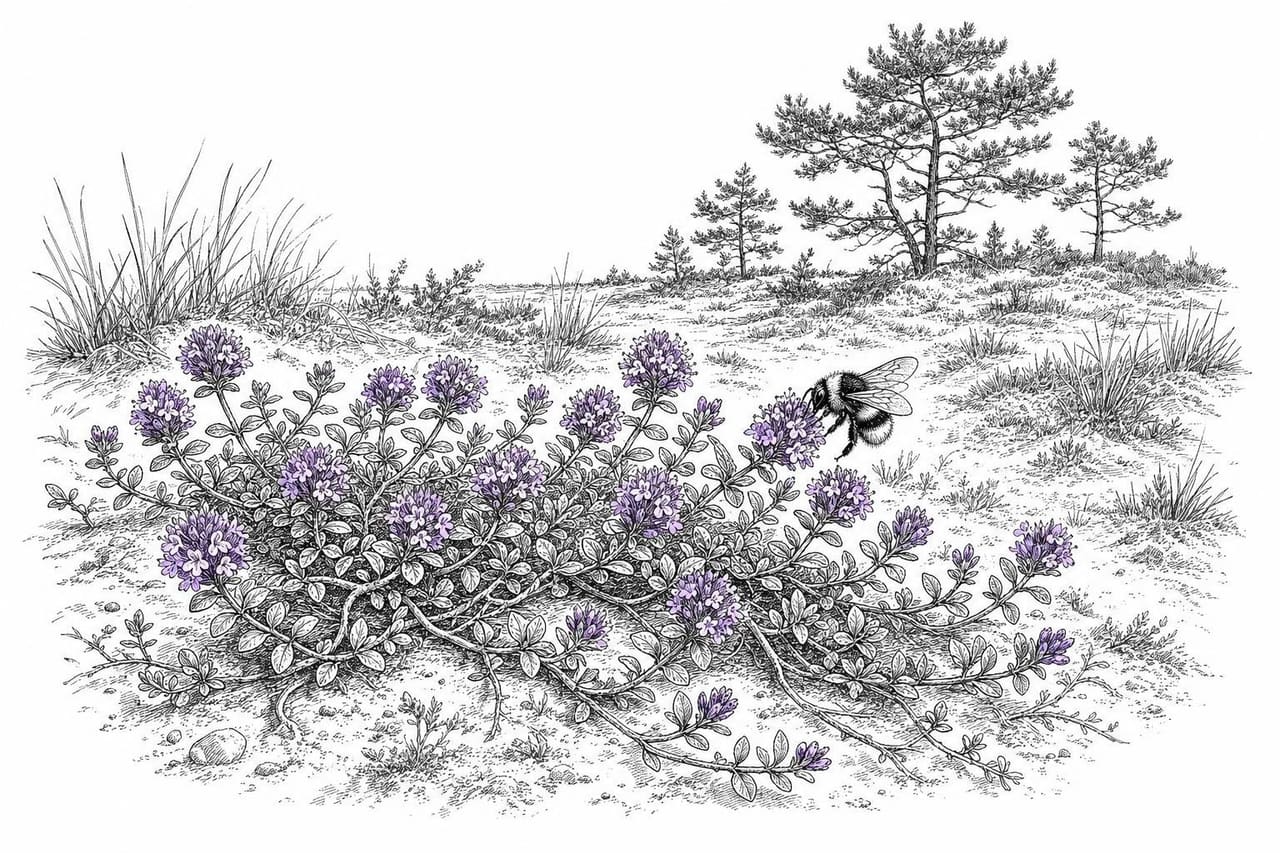
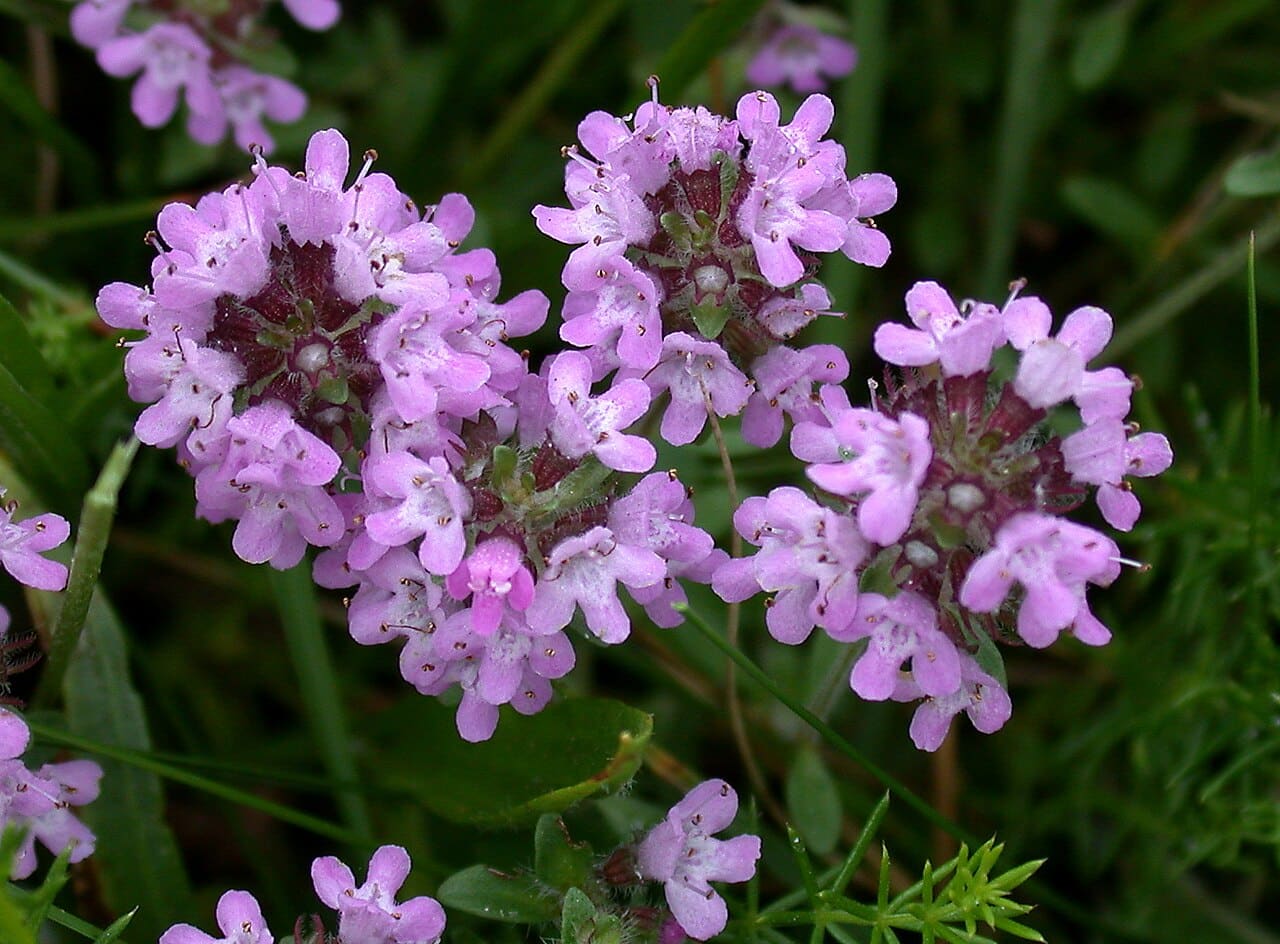
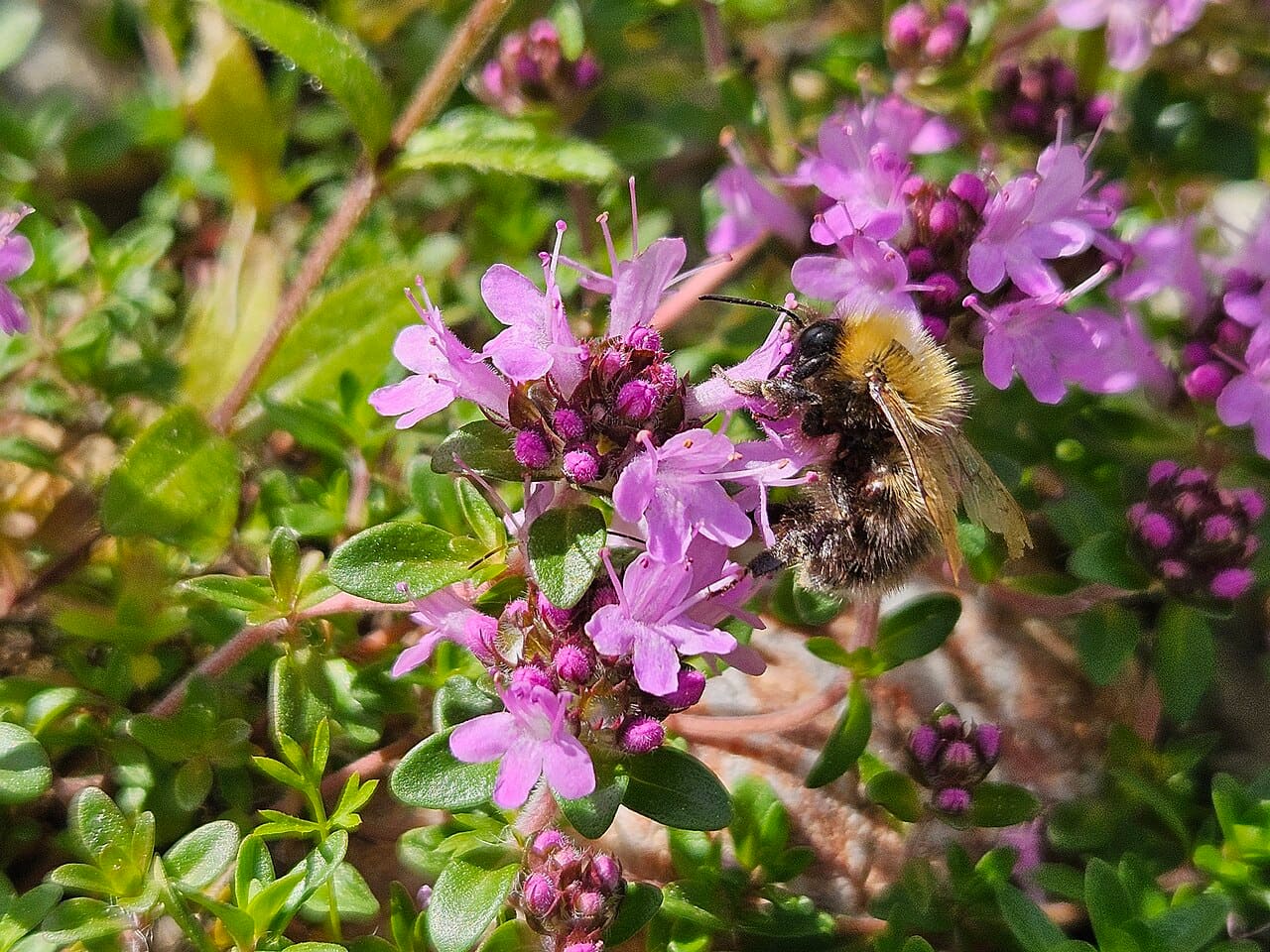
The turf on a sunny Breckland bank in July is barely two fingers deep, grazed tight by rabbits and sheep, and if you kneel on it the smell that comes up is thyme. Not the sharp, almost medicinal thyme of a supermarket packet, but something softer and greener. That smell belongs to the wild thyme plant, a low creeper with pink-purple flower heads that spends most of its life hidden among grasses and only announces itself in high summer, when bees find it before people do.
This section of the guide follows the plant from the heath to the garden and the kitchen. Wild thyme is the starting point, but the same questions keep coming up about its garden relatives, so the pages that branch off from here cover creeping thyme for borders and paving, thyme lawns, sowing from seed, lemon thyme, thyme tea and what to use when the jar is empty. Each is linked below at the point where it becomes relevant.
What the wild thyme plant looks like up close
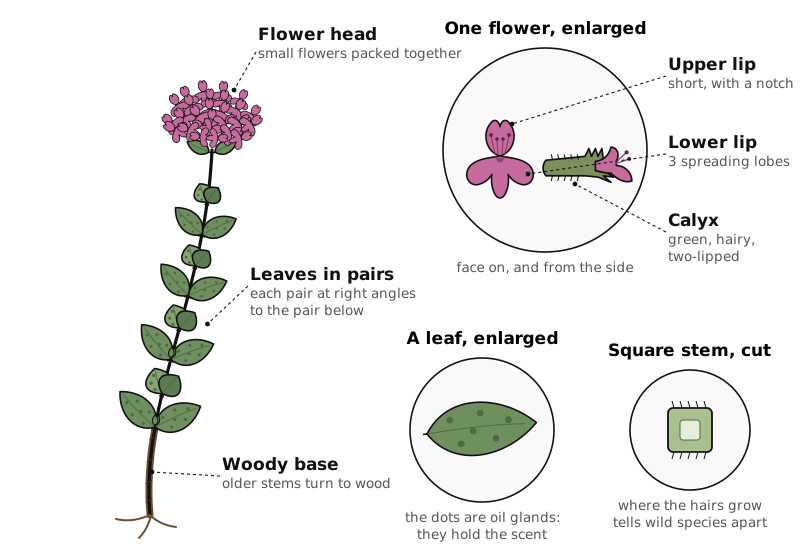
At ground level the first surprise is that it hardly stands up at all. A mature wild thyme plant forms a flat, slightly woody mat, usually somewhere between five and ten centimetres high, made of thin stems that run along the surface and root as they go. The leaves are tiny, oval and arranged in opposite pairs, a dull mid to dark green, and they carry fine hairs that only really show under a hand lens.
The flowers come in tight, rounded heads at the tips of short upright shoots. Each individual flower is small and two-lipped, the shape shared by the whole mint family (Lamiaceae), and the colour runs from pale pink through mauve to a deeper purple. Several heads open at once on a healthy mat, so a patch that looked like nothing in May becomes a low cushion of colour by midsummer.
Scent is the easiest test. Rub a few leaves between finger and thumb and the oil is unmistakably thyme, though gentler than the culinary species. On a hot afternoon there is no need to touch it at all, because a well-grazed slope full of thyme releases the smell every time someone walks across it.
What it is not matters as much. Wild thyme is often confused with small mats of other low plants on poor ground, but the square-ish flowering stems, opposite leaves and that smell rule most lookalikes out quickly.
Three native thymes and a naming muddle
Britain has three native thymes, and the names attached to them have shifted so often that books, seed packets and nursery labels rarely agree. Here they are side by side before the detail.
| Name used in Britain | Botanical name | Where it grows | How to spot it |
|---|---|---|---|
| Wild thyme | Thymus polytrichus subsp. britannicus (also listed as Thymus drucei) | Dry grassland, heaths, dunes, rocks and cliffs across much of Britain | Low creeping mats; stems hairy on two opposite sides |
| Large thyme | Thymus pulegioides | Mainly chalk and limestone grassland | Taller, more upright, stronger smell; stems sharply four-angled with hairs on the corners; no creeping runners |
| Breckland thyme | Thymus serpyllum | Dry sandy heaths and grassland over chalk drift in Breckland | Small prostrate mats; stems hairy all the way round |
The common wild thyme is the plant most people mean. The Royal Horticultural Society files it as Thymus polytrichus subsp. britannicus and treats the older name Thymus drucei as a synonym, while some checklists fold it into Thymus praecox as a subspecies. It is the most widespread thyme in Britain and turns up on suitable ground across most of the country.
Breckland thyme is the one that causes the confusion. Its botanical name, Thymus serpyllum, is the same name garden centres print on almost every creeping thyme they sell, yet the true species is a rarity in Britain. Kew’s Plants of the World Online gives its native range as Europe to western Siberia, with Great Britain at the western edge. A pot labelled “Thymus serpyllum” in a nursery is almost certainly a cultivated form or a hybrid, not a scrap of Breckland heath.
That gap between the label and the wild plant is worth keeping in mind on every page that follows. The garden plants are perfectly good thymes; they are simply not the native wild thyme plant, and they are not the rare Breckland one either.
How the creeping habit keeps it alive
Wild thyme lives in places where taller plants cannot be bothered. Thin, dry, nutrient-poor soils over chalk, limestone or sand drain fast and bake in summer, and grazing animals nibble everything down to a few centimetres. A plant that keeps its stems flat on the ground escapes most of the teeth, holds on to what little moisture sits under its own mat, and spreads sideways by rooting where the stems touch soil.
That creeping growth also explains why the plant disappears when grazing stops. Once rabbits or livestock leave a site, grasses grow up, shade the mat and smother it within a few seasons. Wild thyme does not compete well in long grass, and sites that lose their grazing tend to lose their thyme.
Gardeners copy the same habit for different reasons. A creeping thyme spreads between paving stones, softens the edge of a gravel path and covers dry, sunny ground that would otherwise grow weeds. The garden forms keep the low, rooting stems of their wild relatives, which is why they suit the jobs described on the creeping thyme page and why some people try them as a lawn.
In a pot on a Norwich windowsill, the creeping kinds spill over the rim rather than growing upward. Give them a shallow, gritty container and they will trail.
Where to find wild thyme in Norfolk
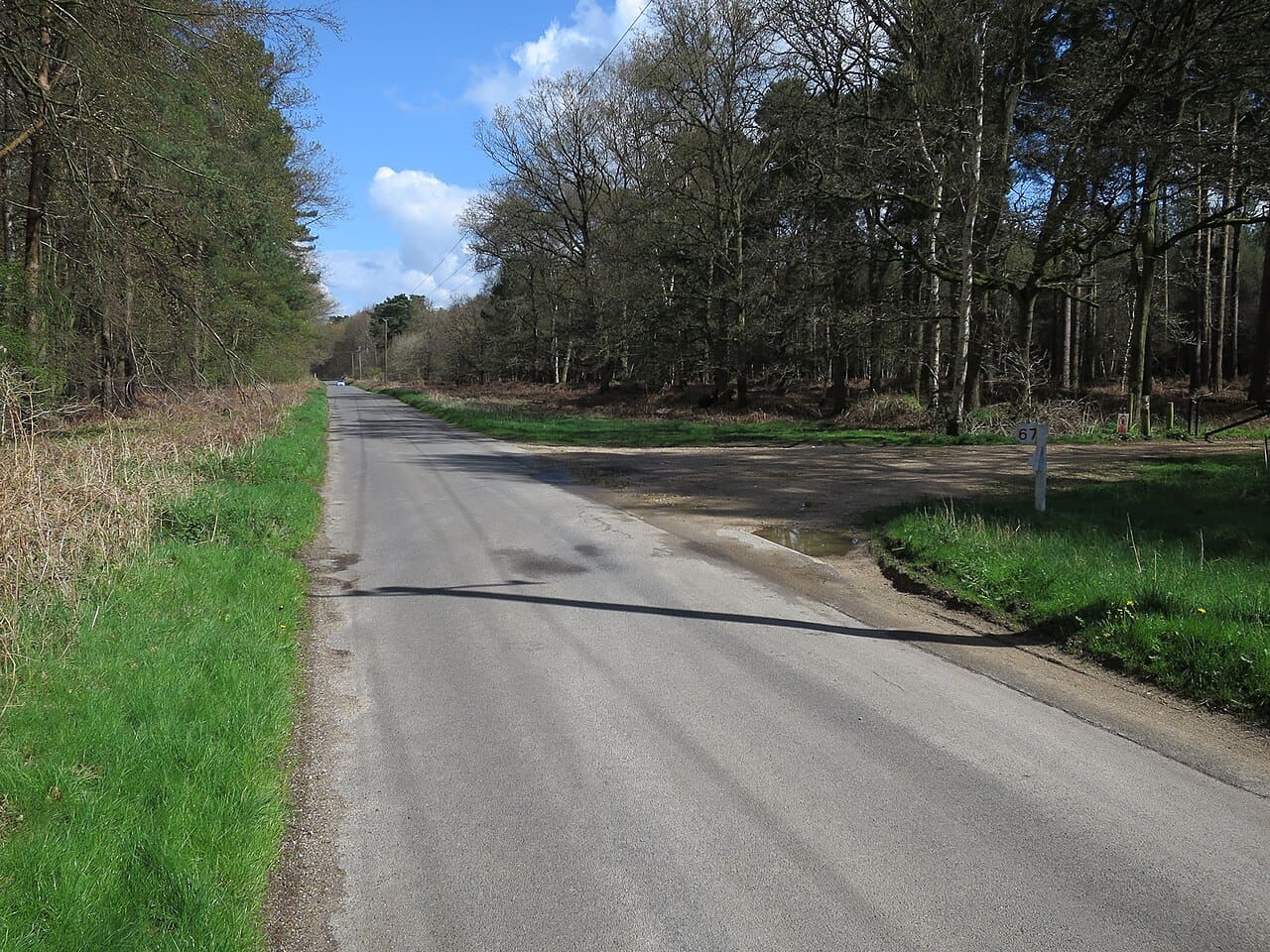
The best-known thyme country in the county is the dry, open south-west. Breckland, the stretch of sandy heath and grassland that straddles the border with Suffolk around Thetford, has the short turf, free-draining soil and long history of rabbit and sheep grazing that thyme needs. Chalk and sandy grassland elsewhere in Norfolk can hold it too, wherever the sward stays short and the ground stays poor.
Breckland is also the only real stronghold in Britain of the rare Breckland thyme. The Botanical Society of Britain and Ireland describes it as confined to dry sandy heaths and grasslands over chalk drift, and notes that it was first recorded in 1773. Since then many of its sites have been lost to forestry and cultivation. On the positive side, the society reports that the return of rabbits and an increase in sheep grazing have kept conditions right at many of the remaining sites, and that its overall distribution now appears stable.
Norfolk Wildlife Trust names Breckland thyme among the rare plants of Thetford Heath, a National Nature Reserve and Site of Special Scientific Interest that lies about three kilometres south of Thetford, between the A11 and the A134, on the Suffolk side of the county line. It is closed from March to October to protect ground-nesting birds, and visitors are asked to view it from the public right of way along its edge, so treat it as a place to understand the habitat rather than to go hunting for a single plant.
Weeting Heath, west of Thetford and also run by the Trust, shows the same story from a different angle. The Trust credits rabbits with keeping the grassland short enough for its scarce Breckland plants, and explains that falling rabbit numbers mean staff now have to do more of that work by grazing with cattle, ponies and sheep. Reading that next to the botanical society’s notes on Breckland thyme makes the link obvious. The plants of the Brecks survive because something keeps the grass down.
A few practical points if you go looking for wild thyme in Norfolk. July is the easiest month, because the flower heads make the mats visible from a standing height. Look on south-facing slopes, track edges and the lips of old rabbit scrapes, where the turf is thinnest. Stay on paths on any reserve, check the Trust’s opening times before travelling, and leave the plants where they are.
Coastal dunes are another classic habitat for the species nationally, and stable, grassy dune turf on the Norfolk coast is worth a look in summer, though the plant is far more predictable inland on the Brecks.
Grazing history explains most of the pattern. When myxomatosis reached Britain in the 1950s and rabbit numbers crashed, much of the short heath turf grew rank, and the low plants that depended on it lost ground. Conservation grazing with sheep, ponies and cattle has since taken over part of the job the rabbits used to do. That is why wild thyme in Norfolk now tends to sit where someone, or something, is still keeping the grass short: managed heaths, sheep-grazed commons, the edges of sandy tracks. An ungrazed heath that has turned to tall grass and bracken will rarely hold much thyme, however promising its soil.
When it flowers and who visits
Most British sources give a flowering season of roughly June to September, with the earliest heads appearing in late May on warm banks. The peak, in most years, is July. After flowering, the heads fade to brown and the mat goes quietly back to being a green smudge in the turf.
Those weeks of flowers matter to insects. Bumblebees and honeybees work the heads steadily on sunny days, and the RHS gives many of the garden creeping thymes its Plants for Pollinators mark for the same reason. On a still afternoon a thyme-covered bank hums with them.
The most famous visitor never comes near Norfolk. The large blue butterfly, which died out in Britain in 1979, has a life cycle bound to wild thyme and to one kind of red ant. According to Butterfly Conservation, its caterpillars first feed on the flower heads of wild thyme, then drop to the ground and are carried by Myrmica ants into their nests, where they feed on the ant grubs; survival is best in nests of Myrmica sabuleti. After reintroduction from continental stock, the butterfly now lives on carefully managed grassland in south-west England, with the Polden Hills in Somerset holding most of the population and a large release on Rodborough Common in Gloucestershire. None of those sites is in East Anglia, and there is no large blue colony in Norfolk.
Thyme honey and the bees
Bees work thyme flowers hard, and in the right landscape they make a honey from them. The most famous is Greek. Honey from the rocky slopes of Mount Hymettus near Athens, where wild thyme covers ground that grows little else, has been prized since classical times, and the Hyblaean mountains of Sicily have a similar reputation. Thyme honey is still made across Greece, and Greek rules set standards for what may be sold under that name; researchers grade it by how much of its pollen comes from thyme.
A single-flower honey like that needs a landscape where one plant dominates while the bees are foraging. Britain rarely offers it. Here wild thyme is one summer flower among many on a chalk bank or a Breckland heath, so its nectar ends up blended into a general summer honey rather than sold on its own. A jar labelled thyme honey in a British shop usually comes from Greece or elsewhere around the Mediterranean.
The bees that matter most to wild thyme in Britain are often not honeybees at all. Bumblebees, solitary bees and butterflies visit the flowers, and a patch of creeping thyme in a sunny garden is one of the simplest ways to give them a summer food source.
The plant through the rest of the year
Flowers are only a few weeks of the story. Wild thyme is evergreen, so the mats stay on the ground right through winter, darker and duller than in summer, often half buried in moss and dead grass. A January walk on the Brecks will show them to anyone who knows the leaf shape, although the smell is fainter in the cold.
New shoots start to lengthen in spring, and by May the mats look fresher and greener, with upright flowering stems beginning to rise. After flowering the plant sets small seeds inside the old flower heads, which turn brown and papery by early autumn. Some mats spread mainly by rooting stems rather than by seed, so a single large patch can be one plant that has crept outwards over many years.
Woody old stems are normal. On a heath, nobody trims them, and grazing animals do the work of keeping the plant compact. In a garden the same woodiness is the reason creeping thymes get patchy in the middle after a few seasons and need a light trim after flowering.
Frost is rarely the problem on dry, sandy ground. What thyme cannot cope with is sitting wet, which is why it is a plant of free-draining slopes and not of the damp hollows a few metres away.
Picking, uprooting and what the law says
Wild thyme is common across Britain, but common does not mean free to take. The Wildlife and Countryside Act 1981 makes it an offence for anyone who is not an “authorised person” to intentionally uproot any wild plant, and the authorised person is essentially the owner or occupier of the land or someone with their permission. Digging up a mat of thyme from a heath or a verge to plant in a garden therefore breaks the law, and on a protected site it can also break the separate rules that apply to Sites of Special Scientific Interest and National Nature Reserves.
Picking is treated differently. Section 13 of the Act, published in full on legislation.gov.uk, protects the plants listed in its Schedule 8 from picking as well as uprooting, but for other wild plants it is the uprooting that is the offence. In practice that means a few sprigs from a large, healthy patch of common wild thyme on land with public access is not a crime. That does not make it a good idea everywhere.
The sensible rule is short.
Leave reserves, Breckland heaths and anywhere with signs about rare plants completely alone, and never touch anything that might be Breckland thyme. Away from such places, thyme for the kitchen or a cup of tea is better grown at home. It is quicker, it tastes stronger, and the plant on the heath is doing more useful work feeding bees than it would ever do in a saucepan.
Bringing a wild thyme plant into the garden
The legal way to get a native wild thyme plant is to buy it, either as a pot-grown plant or as seed from a supplier of native wildflowers. Seed of UK origin is the better choice for a wildlife garden or a meadow strip, because it keeps local genetics in the mix. Collecting seed from a reserve is not the answer: those plants are there to keep the population going, and the site rules on most nature reserves forbid taking any plant material. A packet from a native seed supplier costs little and avoids the question entirely, and the plants that come up will behave like the ones on the heath, slow to start and happiest once they have a year of roots behind them. Garden centres mostly sell cultivated creeping thymes instead, which behave in a similar way but have been selected for flower colour, leaf colour or neat growth.
Either way, the conditions to copy are the ones the plant enjoys on the heath. The RHS asks for a warm, sunny spot with light, well-drained soil, and advises growing thyme in a container or raised bed where the ground is heavy or stays damp, especially in winter. Wet roots in a cold month kill more thyme than frost does. Mixing grit into the planting hole, or into the compost of a pot, goes a long way on Norfolk’s heavier soils.
Spacing, trimming and the choice between the many creeping cultivars belong on their own page, and the creeping thyme guide linked earlier compares the main ones. Anyone thinking about replacing a patch of grass should read the creeping thyme lawn page before buying a single plug, because a thyme lawn suits some gardens and fails badly in others. Seed-raising is covered step by step in growing thyme from seed, with the warning that named varieties do not come true from seed.
Creeping thyme, culinary thyme and the kitchen
The creeping wild species is edible and smells good, but it is small, slow and better left in place. For cooking, almost everyone grows one of the bushier thymes instead: common thyme, Thymus vulgaris, for stews, roast vegetables and stocks, or lemon thyme, with its citrus edge, for anything from beans to baking. The lemon thyme page explains how it differs and how to keep a plant going.
Thyme earns its place in autumn cooking, with roast squash, mushrooms and slow bean stews, and the what’s in season calendar shows which produce is at its best month by month. For a hot drink, the thyme tea page covers how to make a cup and what it tastes like. If a recipe calls for thyme and there is none in the house, the thyme substitutes page compares oregano, marjoram, savory and herb blends, with sensible amounts for dried and fresh.
One small detail from the RHS is easy to miss: thyme flowers taste much like the leaves, and they can be scattered over salads. A few pink heads from a garden plant in July, broken over tomatoes or a grain salad, add colour as well as flavour.
What to look for on the next walk
Next July, on any short, dry, sunny turf, look down rather than out. The mats are small, the heads are low, and the bees usually point to them first. Kneel, crush a leaf, and the smell settles the question within a second. If the stems are hairy all the way round and the ground underfoot is Breckland heath, it may be one of the rarest thymes in Britain, so take a photograph, note the spot, and send the record to the Norfolk Biodiversity Information Service rather than taking anything home.
Thyme through history, to today
- θύμονthymonGreek
- thymumLatin
- thymOld French
- timeEnglish, c. 1300
- thymeEnglish today
- c. 29 BC
Thyme by the hives
In the fourth book of the Georgics, his poem on farming, Virgil tells beekeepers to let wild thyme and savory flower around the hives, to plant thyme near them, and to burn thyme in the hive before a hard winter. Of the busy hive he writes 'redolentque thymo fragrantia mella': the fragrant honey smells of thyme.
Source: Virgil, Georgics IV, Latin text (Perseus) - AD 77
Thyme and the honey of Attica
Pliny the Elder records that thyme flowers around the summer solstice, that beekeepers judged the coming honey crop by how well it bloomed, and that the honey of Attica was thought the best in the world, which is why its thyme was transplanted elsewhere.
Source: Pliny, Natural History 21.31 (Perseus) - c. 1300
The word reaches English
Thyme enters English as 'time', from Old French and Latin, and gains its 'th' spelling later. The thymus gland in the chest is named after the plant.
Source: Online Etymology Dictionary - Mid-1590s
Oberon’s bank
Shakespeare puts wild thyme in the first line of Oberon's speech in A Midsummer Night's Dream: 'I know a bank where the wild thyme blows'.
The speech, line by line → - 1597
Too well known to describe
John Gerard's Herball, first published in 1597 and enlarged by Thomas Johnson in 1633, calls common creeping thyme 'so well known, that it needeth no description', and records a white-flowered form planted in Gerard's own garden.
Source: Gerard's Herball, chapter 'Of Wild Thyme' - 1979
A butterfly lost
The large blue butterfly becomes extinct in Britain. Its caterpillars feed first on the flower heads of wild thyme, then live in the nests of one species of red ant, so it needs short, grazed turf where both thrive.
Source: Butterfly Conservation - 1980s on
And brought back
Conservationists reintroduce the large blue from continental Europe and restore grazing on its slopes. It now flies again at a number of sites in south-west England, laying its eggs on wild thyme.
Source: Kent Wildlife Trust - 2003
Thymol in the beehive
A gel of thymol, the main aromatic compound of thyme, is authorised in Great Britain as a treatment for honey bee colonies against the varroa mite. Thyme is back by the hives, two thousand years after Virgil.
Source: Veterinary Medicines Directorate - 2014
A regulator’s verdict
The European Medicines Agency publishes its monograph accepting thyme preparations, on the basis of long traditional use, for chesty coughs with colds.
What the evidence says → - Today
Still in the bathroom cabinet
Listerine Antiseptic lists thymol as one of its four active ingredients, and herb nurseries in England still raise thyme plants for gardens.
Where thyme plants are grown →
The thyme year
| Task | Jan | Feb | Mar | Apr | May | Jun | Jul | Aug | Sep | Oct | Nov | Dec |
|---|---|---|---|---|---|---|---|---|---|---|---|---|
| Sow indoors | yes | yes | yes | |||||||||
| Plant out | yes | yes | yes | |||||||||
| In flower | yes | best | best | yes | ||||||||
| Light trim | yes | yes | yes | |||||||||
| Softwood cuttings | yes | yes | yes | |||||||||
| Semi-ripe cuttings | yes | yes | ||||||||||
| Divide or layer | yes | yes | yes | yes | ||||||||
| Pick | yes | yes | yes | yes | best | best | best | best | yes | yes | yes | yes |
| Shelter pots from wet | yes | yes | yes | yes |
in season at its best. Flowering varies with the summer and the variety; times follow the RHS growing advice for thyme in Britain.
Questions
How can I recognise a wild thyme plant?
Look for a low, woody mat a few centimetres high on dry, sunny ground, with tiny paired oval leaves and dense rounded heads of pinkish-purple flowers from about June to September. Crush a leaf: the scent is thyme, though milder than the kitchen kind. Taller, upright tufts with a stronger smell and no creeping runners are more likely to be large thyme, the other common native species.
Where can you see wild thyme in Norfolk?
Wild thyme in Norfolk is a plant of short, dry turf, so the Breckland heaths around Thetford and sunny, grazed grassland on sandy or chalky soil are the places to look. The much rarer Breckland thyme is recorded on Thetford Heath National Nature Reserve, which is closed from March to October for nesting birds but can be viewed from the public right of way along its edge.
Is it legal to pick wild thyme in the UK?
Under the Wildlife and Countryside Act 1981 it is an offence to uproot any wild plant without the permission of the landowner or occupier, so digging up wild thyme is not allowed. Taking a few sprigs from a plentiful, common plant is a different matter, but nature reserves and protected sites often have their own rules, and rare Breckland thyme should be left untouched.
Is wild thyme the same as the thyme sold for cooking?
No. Supermarket and garden-centre culinary thyme is usually common thyme, Thymus vulgaris, a bushy Mediterranean species. The native wild thyme plant is a low creeper with a gentler flavour. Both belong to the same genus and can be used in the same way, but most cooks grow common or lemon thyme for the kitchen and leave wild populations alone.