
Wild thyme field guide
What Does Thyme Look Like? A Key to Thyme and Its Lookalikes
Find your thyme in a few questions
Step 1
How does the plant grow?
Step 2
Look at the flowers.
Step 3
Look at the leaves.
Step 4
Where is it, and how are the hairs on a lower stem arranged? (a hand lens helps)
Step 5
Rub a leaf between your fingers.
Step 6
How big are the leaves?
Step 7
Where do the leaves sit and how do the flowers look?
Result
Common thyme Thymus vulgaris
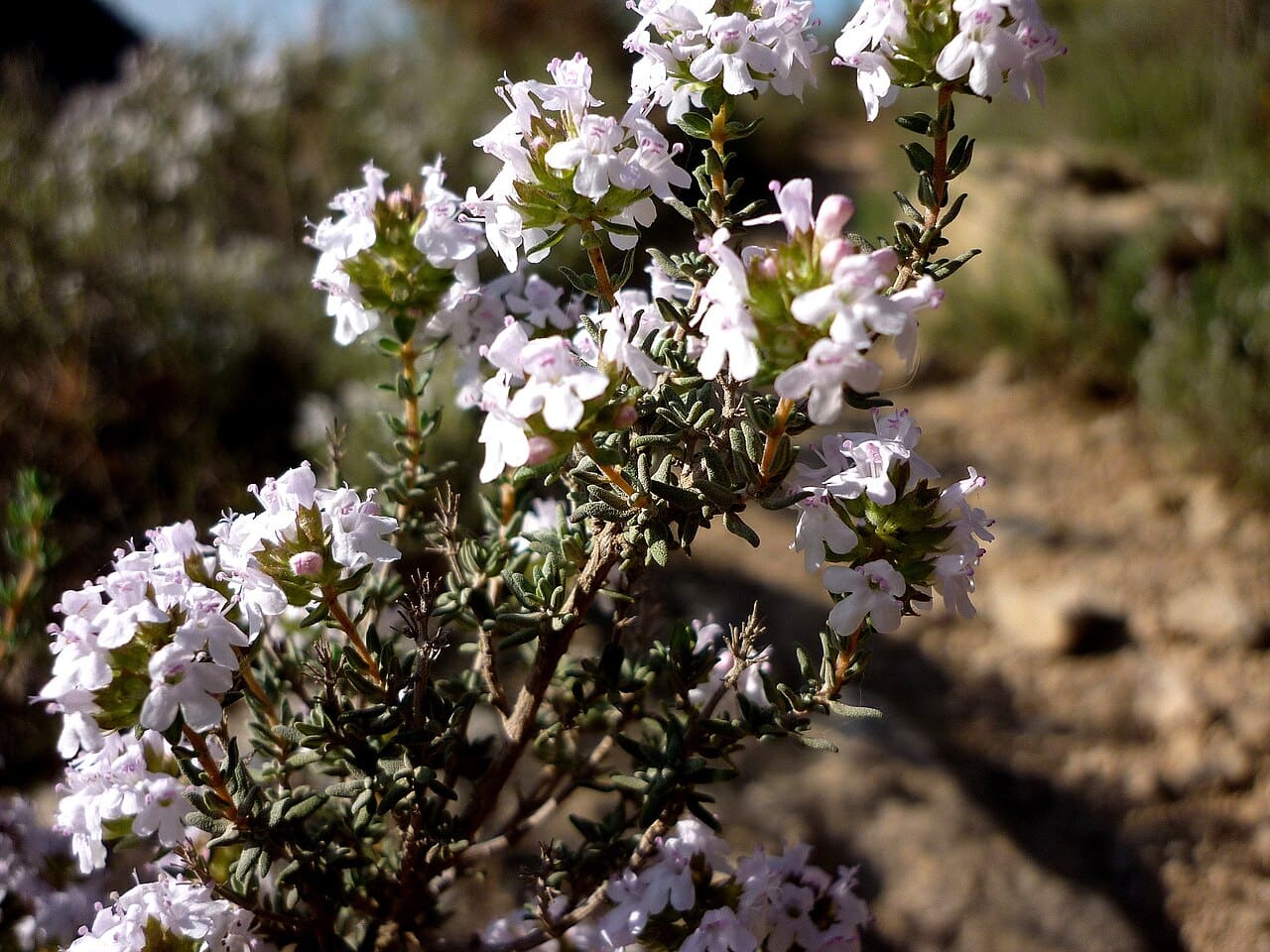
The kitchen thyme of the Mediterranean, grown in UK gardens and pots. A small upright shrub with woody stems, tiny narrow grey-green leaves and pale lilac to white flowers in early summer.
Result
Lemon thyme Thymus × citriodorus
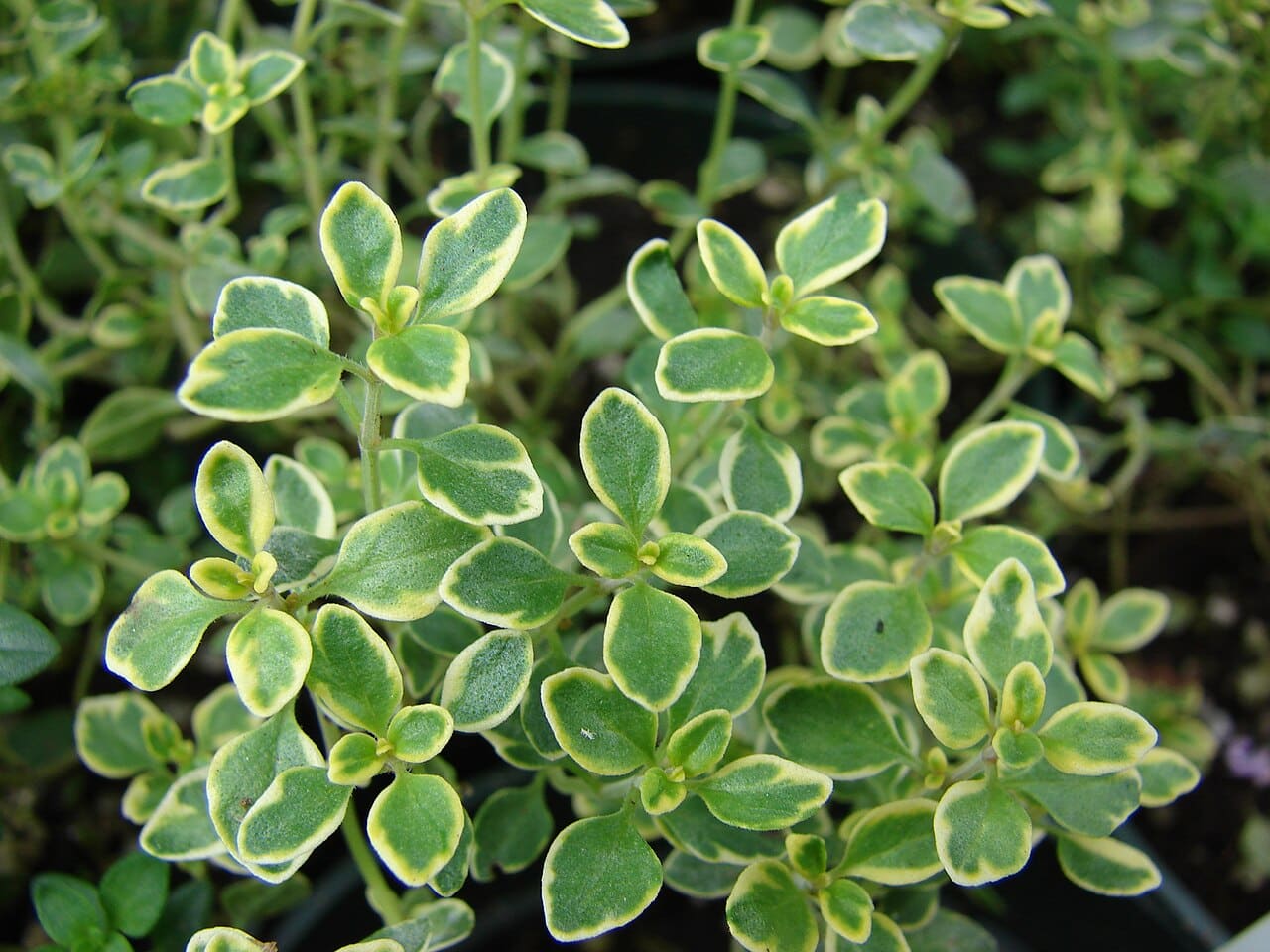
A garden thyme with a lemon scent when the leaves are rubbed. Leaves are often broader and glossier than common thyme, and many varieties are edged with gold or silver.
Result
A creeping garden thyme usually a cultivar of Thymus serpyllum or Thymus praecox
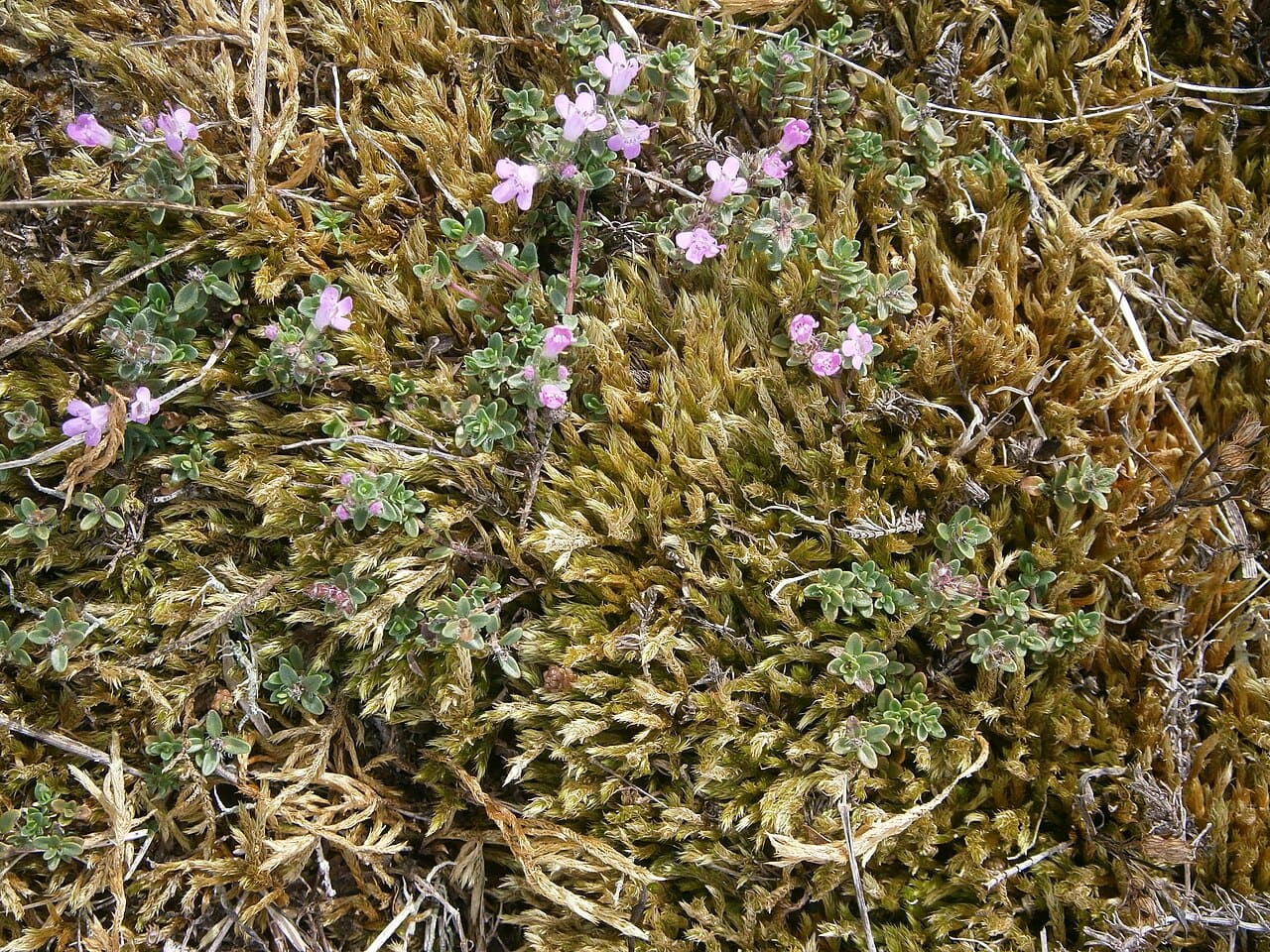
Garden creeping thymes are sold under variety names such as 'Coccineus', 'Pink Chintz' or 'Elfin'. Identifying the exact variety from the plant alone is rarely possible; the label is the best evidence.
Result
Woolly thyme Thymus pseudolanuginosus
A garden thyme grown for its grey, softly hairy leaves, which form a very flat mat between paving and on rock gardens. It flowers sparsely and is grown for its foliage rather than for cooking.
Result
Wild thyme Thymus polytrichus (also listed as T. drucei)
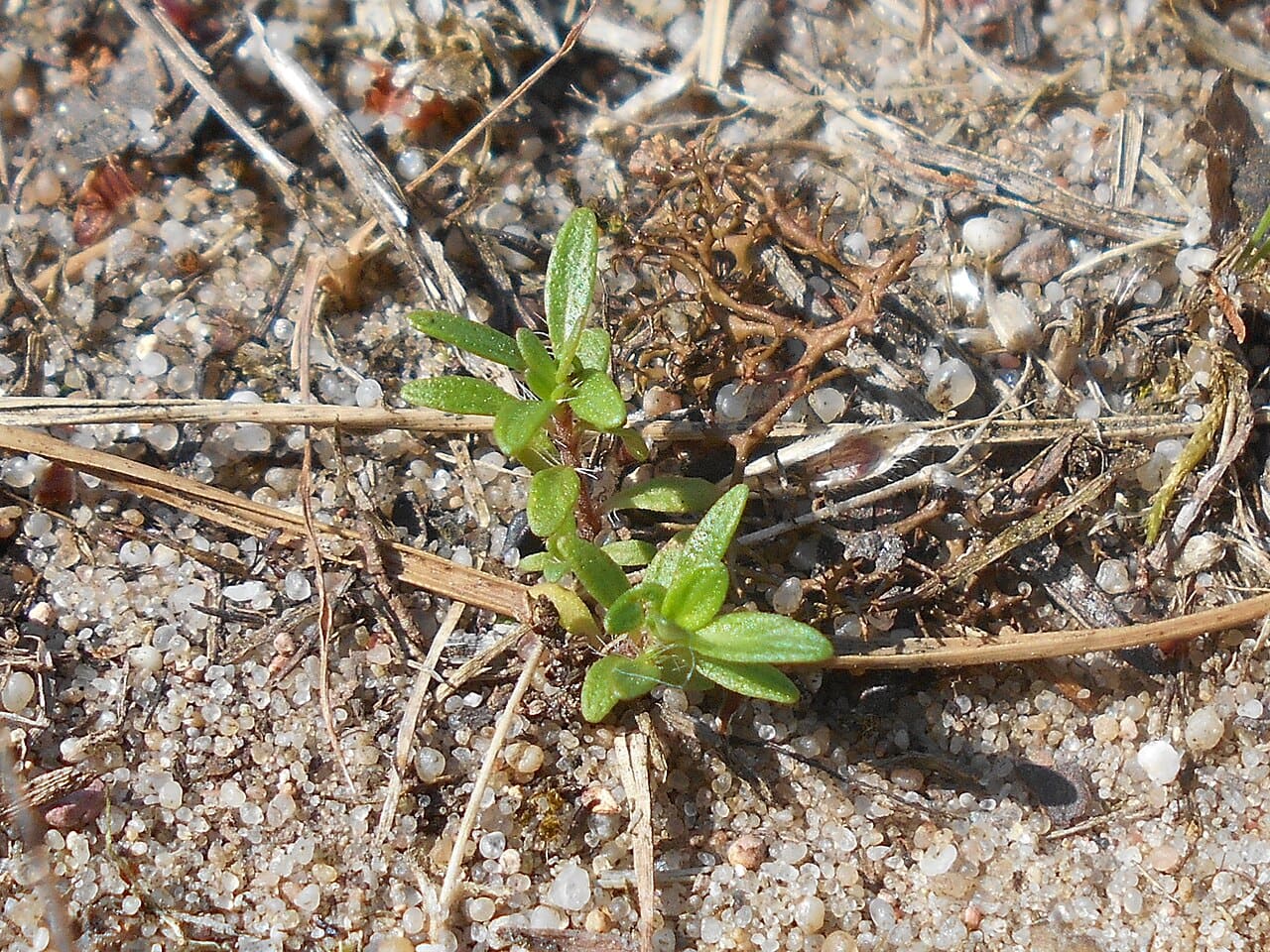
The common wild thyme of Britain, found on short grassland on chalk and limestone, heaths, cliffs and dunes. The stems are only faintly four-angled and carry hairs on two opposite faces. The differences between the native thymes are slight, so a record should be confirmed with a county botanical recorder.
Result
Breckland thyme Thymus serpyllum
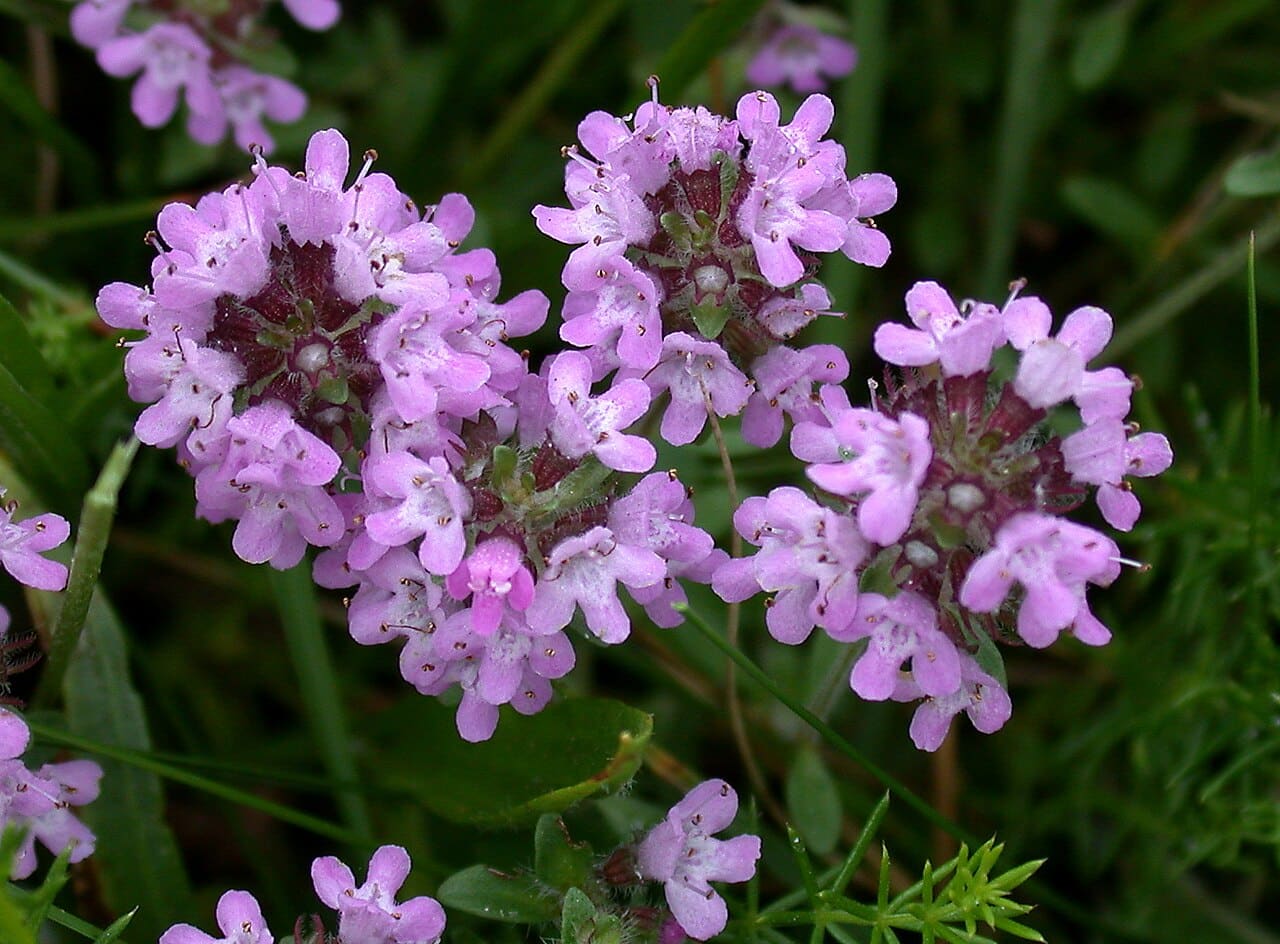
In Britain this species grows wild only on the Breckland heaths of Norfolk and Suffolk. The stems are hairy all round. It is rare and protected on its sites: look, photograph and leave it where it grows.
Result
Large thyme Thymus pulegioides
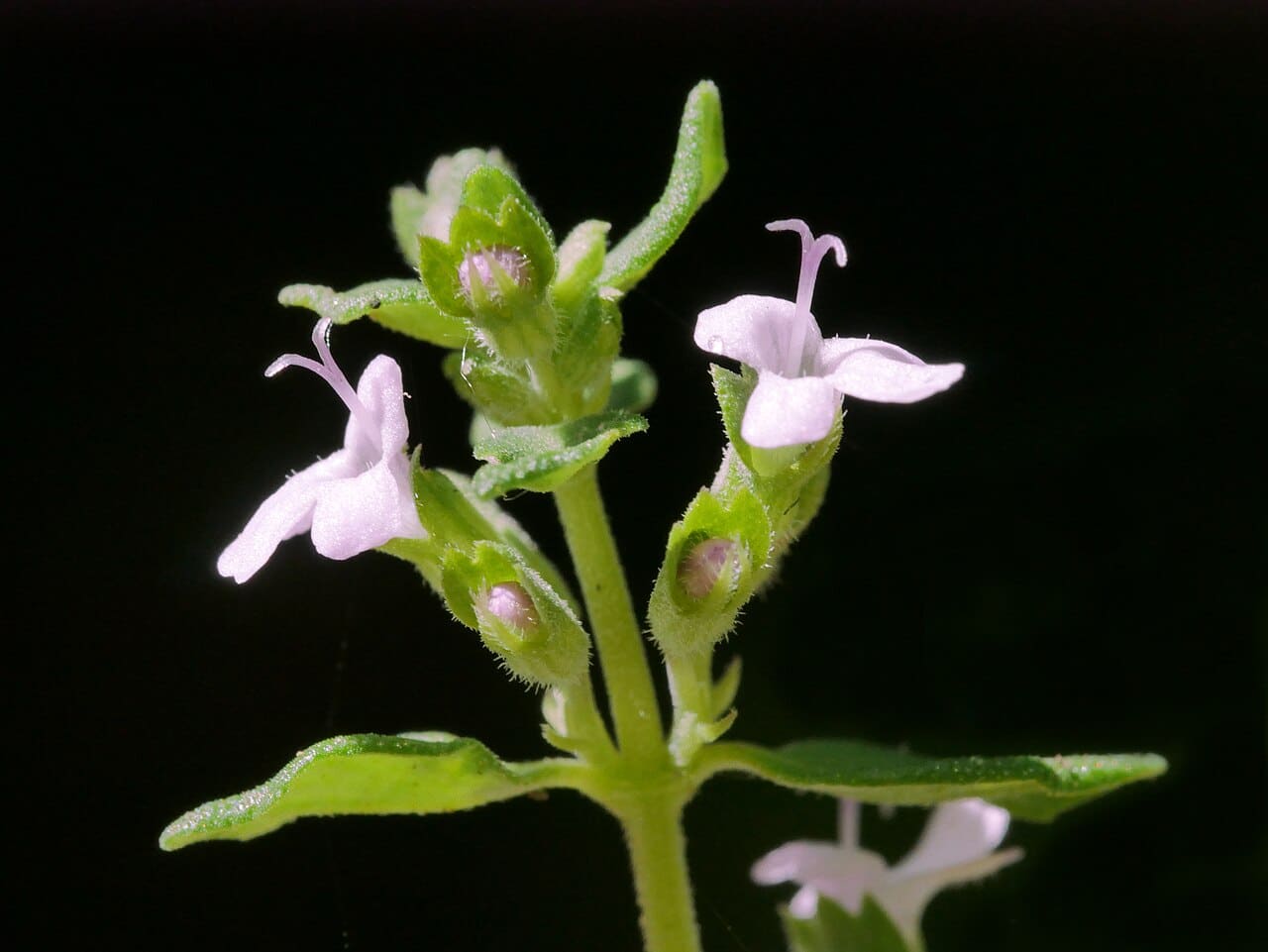
A native thyme of dry grassland, a little taller than wild thyme, with stems that are clearly four-angled and hairy mainly on the corners. Records should be confirmed with a county botanical recorder.
Result: a lookalike
Not a thyme: thyme-leaved speedwell Veronica serpyllifolia
A common lawn and garden weed with small oval leaves like thyme, but four-petalled pale blue or white flowers with dark veins, held in a short spike at the stem tip. The leaves have no scent. It is not used in the kitchen.
Result: a lookalike
Probably sweet marjoram, not a thyme Origanum majorana
A close relative of oregano with soft grey-green leaves that tend to bunch towards the tips and a sweeter smell. Marjoram and oregano are hard to tell apart reliably; in the kitchen the difference is mostly flavour.
Result: a lookalike
Probably oregano (wild marjoram), not a thyme Origanum vulgare
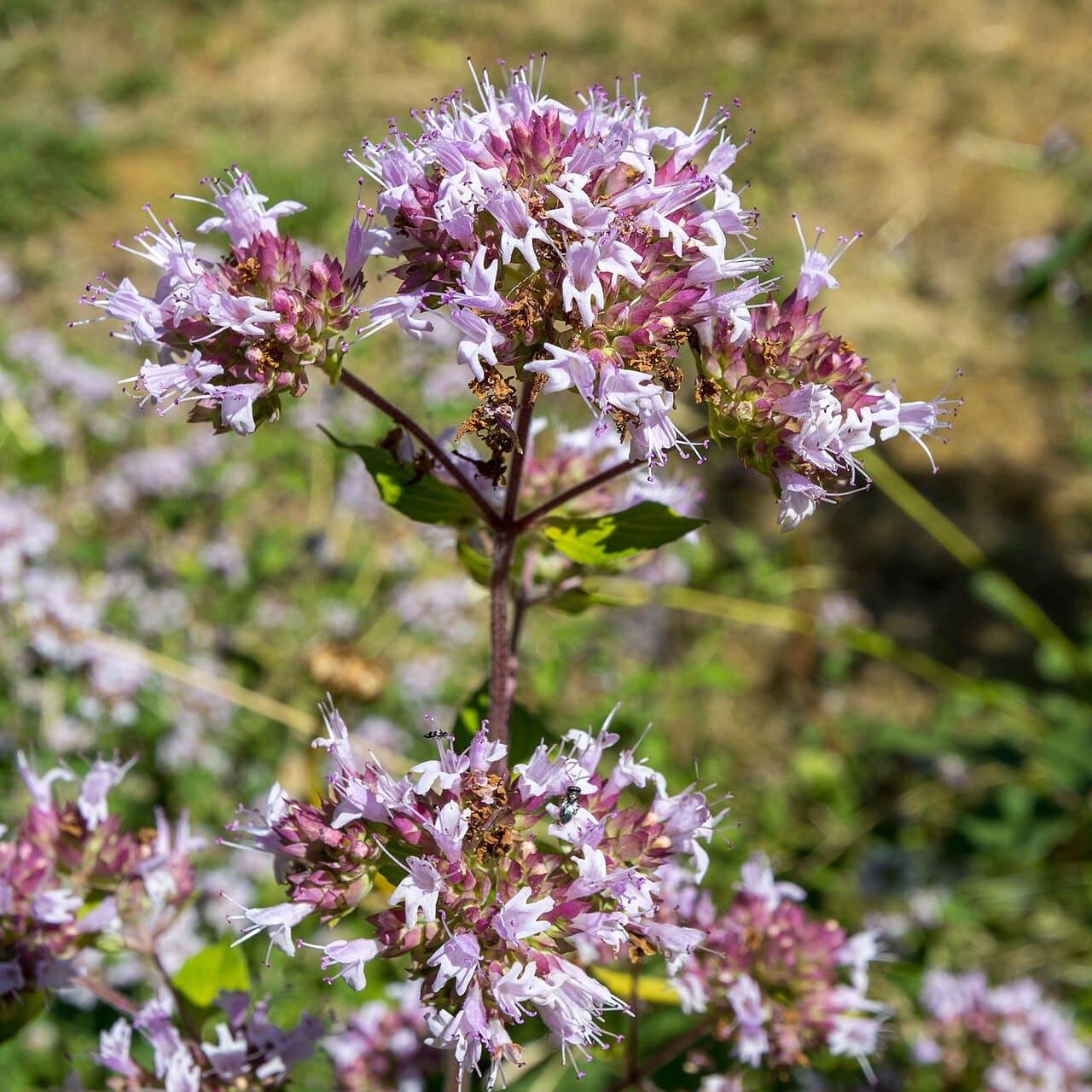
Native to Britain on chalk grassland as wild marjoram, and the familiar oregano of the herb garden. The leaves are larger and greener than thyme and the flowers sit in loose, flat-topped clusters with purple bracts.
Rub a leaf first. Of all the tests on this page, that one does the most work, because thyme announces itself through the nose before the eye has finished counting leaves. Sharp, resinous and slightly medicinal means a true thyme; lemon means lemon thyme; sweet, peppery or nothing at all means it is probably something else.
The key above walks through the rest in order. It asks how the plant grows, then what the flowers look like, then what the leaves and stems show, and it ends either with a named thyme or with the plant that has been mistaken for one. Each step offers a short list of choices, and only one should fit. If two seem to, the photograph and the notes below each result are there to break the tie.
What thyme looks like, from stem to flower
Thymes are members of the mint family, the Lamiaceae, and they carry the family features: square stems, leaves in opposite pairs and two-lipped flowers. What sets them apart from their relatives is scale. A thyme leaf is small, usually well under a centimetre long, and the plant as a whole is built low and tight, either as a little bush with woody lower stems or as a flat mat that roots as it spreads.
Leaves
The leaves sit in pairs along the stem, each pair turned at right angles to the one below, so a shoot seen from above looks like a neat four-sided column of foliage. Common thyme, Thymus vulgaris, has narrow grey-green leaves whose edges often curl under. Lemon thyme has broader, glossier leaves, and many of the varieties sold in garden centres are edged with gold or cream. Wild thyme on a chalk bank has rounder, brighter green leaves than either.
Hold a leaf against the light and the surface may show tiny pale dots. These are oil glands, and they are why crushing a thyme leaf releases so much scent from so little plant.
Stems
Garden thymes become woody at the base within a year or two. The young shoots stay green and flexible, but older stems turn brown and wiry, and the plant takes on the look of a tiny shrub. Creeping thymes keep their stems along the ground, putting down roots where they touch the soil.
For the native wild thymes, the stem is where the real identification happens, and it needs a hand lens. The hairs on a lower stem are arranged differently in each species: hairy all round, hairy on two opposite faces only, or hairy mainly on the four corners of a clearly square stem. The key uses those patterns, and they are the same ones British botanists use. The differences are small, which is why a wild record is worth confirming with the county botanical recorder before it goes into a database.
Flowers
Thyme flowers are small, two-lipped and packed together. On wild and creeping thymes they form rounded heads at the tips of short upright shoots; on common thyme they are looser and paler, from lilac to almost white. Colour runs from white through pink and mauve to deep magenta in the garden varieties sold as “red”.
Flowering time depends on the plant and the summer, but in Britain the main show is from late spring into August. Bees notice it before people do. A patch of wild thyme in flower on a warm day hums.
Sprigs
A sprig of thyme, the unit recipes ask for, is a single soft-tipped shoot about the length of a finger, cut from the top of the plant. It carries a dozen or more pairs of leaves. In the kitchen the leaves are stripped off by running finger and thumb down the stem against the direction of growth, and the woody stalk is discarded. If a recipe asks for “a sprig” it means one of these, not a bunch.
The thymes you are most likely to meet
Most people trying to identify a thyme are looking at one of four plants, and two of them were bought rather than found.
Common thyme is the kitchen thyme of the Mediterranean, upright and shrubby, sold in every garden centre and supermarket herb rack in the country. If the plant came from a pot and smells like thyme, this is the first guess and usually the right one.
Lemon thyme, Thymus × citriodorus, gives itself away the moment it is touched. The leaves smell clearly of lemon, and the gold and silver-edged forms are among the most popular. It has its own page, lemon thyme, with the varieties and how to use them.
Creeping thymes are the mat-forming kinds sold for paths, rockeries and lawns, usually named cultivars of Thymus serpyllum or Thymus praecox. Telling one cultivar from another by looking is rarely possible once the label has gone, and the honest answer is that the label is the identification. The creeping thyme guide lists the varieties the RHS describes, with their flower colours and heights.
Wild thyme is the native plant of short grassland, heaths, cliffs and dunes. Britain has three native species, and the wild thyme field guide explains where each grows and why one of them, Breckland thyme, is found only on the heaths of Norfolk and Suffolk.
The lookalikes, and how to rule them out
Three plants turn up again and again in “is this thyme?” questions.
Oregano, which grows wild on chalk in southern England as wild marjoram, is the most common. Its leaves are larger and greener, its flowers sit in loose, branching, flat-topped clusters with purple bracts, and its smell is peppery rather than resinous. Sweet marjoram, its cultivated cousin, has softer grey-green leaves that tend to bunch towards the tips of the shoots and a sweeter smell.
Telling oregano from marjoram is harder than telling either from thyme, and gardeners and botanists do not draw the line in the same place. For cooking the difference is flavour, and the thyme substitutes page covers both as stand-ins.
The third is a weed. Thyme-leaved speedwell, Veronica serpyllifolia, creeps through damp lawns and borders with small oval leaves that really do resemble thyme. Look at a flower and the resemblance ends: four petals, pale blue or white, striped with dark veins, held in a short leafy spike at the tip of the stem. Crush a leaf and nothing happens. It is harmless and common, and not a herb.
What thyme looks like through the year
Thyme is evergreen, so it can be identified in any month, but it does not look the same in January as in June.
In spring the plants put on soft, bright new growth at the shoot tips, and the leaves are at their greenest. This is when garden thymes look most like their pictures.
In early to midsummer they flower, and creeping and wild thymes can disappear under a haze of pink and purple. Flowering is the easiest time to name the wild species, because the key’s questions about flower heads and stems can all be answered.
In late summer and autumn the flower heads dry to brown and the plants look tired. Trimming the old flowers off garden plants tidies them up.
In winter many creeping thymes turn bronze, purple or dull green in the cold, and common thyme can look grey and sparse. That is normal and not a sign the plant is dying, so long as the stems are firm and the base is not rotting.
Garden thymes in wild places
Not every thyme growing outside a garden is a native wild plant. Common thyme and creeping garden varieties sometimes seed into walls, gravel drives, pavements and waste ground near houses, and they can survive there for years.
These escapes are worth knowing about before deciding you have found something rare. A thyme growing in a town wall or a car park margin, or a few metres from a garden fence, is more likely to be a garden plant than one of the native species. The native thymes are plants of established short turf, heaths, cliffs and dunes, and their presence in a place usually goes with other plants of those habitats.
Using the key well
A few habits make the key more reliable, and none of them takes long.
Look at more than one shoot. A single stem can be untypical, especially on a plant that has been trimmed or trodden. Pick three or four from different parts of the plant and see what most of them show.
Use the flowers when there are any. Between autumn and late spring the key leans on leaves and smell, which is enough for garden plants but leaves the wild species uncertain. Coming back in June or July often settles a question that February could not.
Take a photograph rather than a piece. Wild thymes grow on some of the most protected ground in the country, and Breckland thyme in particular is rare. Under the Wildlife and Countryside Act 1981 it is an offence to uproot a wild plant without the landowner’s permission, and on nature reserves and Sites of Special Scientific Interest picking is usually not allowed at all. A close photo of a stem, a leaf and a flower head, with a coin or a finger for scale, carries almost all the information the key needs.
And if the result is “probably”, accept it. The garden centre label, the smell and the shape will name a kitchen thyme with confidence. The native species are a different matter, and even experienced botanists send their specimens to a referee.
Where the photographs come from
Each result in the key is illustrated with a photograph of that plant, taken by a named photographer and published on Wikimedia Commons under an open licence. The photographer and licence are given under each image. Some of the photographs were taken outside Britain, which makes no difference to how the plant looks but is worth knowing when reading the background of a picture.
Questions
What does a thyme plant look like?
Most thymes are small, woody-based plants with tiny paired leaves, usually well under a centimetre long, set close together along thin stems. Garden thyme grows into a low bush about 20 to 30 centimetres tall, while wild and creeping thymes spread flat along the ground. In summer they carry small two-lipped flowers, pink, mauve, purple or white, gathered into rounded heads or short spikes at the stem tips.
What do thyme leaves look like up close?
They are small, oval to narrowly lance-shaped and arranged in opposite pairs, each pair at right angles to the one below. Common thyme leaves are grey-green with edges that often curl under; lemon thyme leaves are broader and glossier; wild thyme leaves are a brighter green. Hold a leaf up to the light and you may see tiny glands, which hold the oil that gives thyme its smell.
How can I tell thyme from oregano?
Size and smell are the quickest tests. Oregano leaves are noticeably larger and greener, often two or three times the size of a thyme leaf, and its flowers sit in loose, flat-topped clusters with purple bracts rather than in rounded heads. Rub a leaf: thyme smells sharp and resinous, oregano more peppery. Both belong to the mint family, which is why they share square stems and paired leaves.
Is there a weed that looks like thyme?
Thyme-leaved speedwell is the usual one. It creeps through lawns with small oval leaves that resemble thyme, but its flowers have four pale blue or white petals with dark veins and sit in a short spike at the tip of each stem. The leaves have no scent when rubbed, which settles the question in a second.