
Wild thyme field guide
Thyme Benefits: What the Evidence Says About Thyme, Tea and Oil
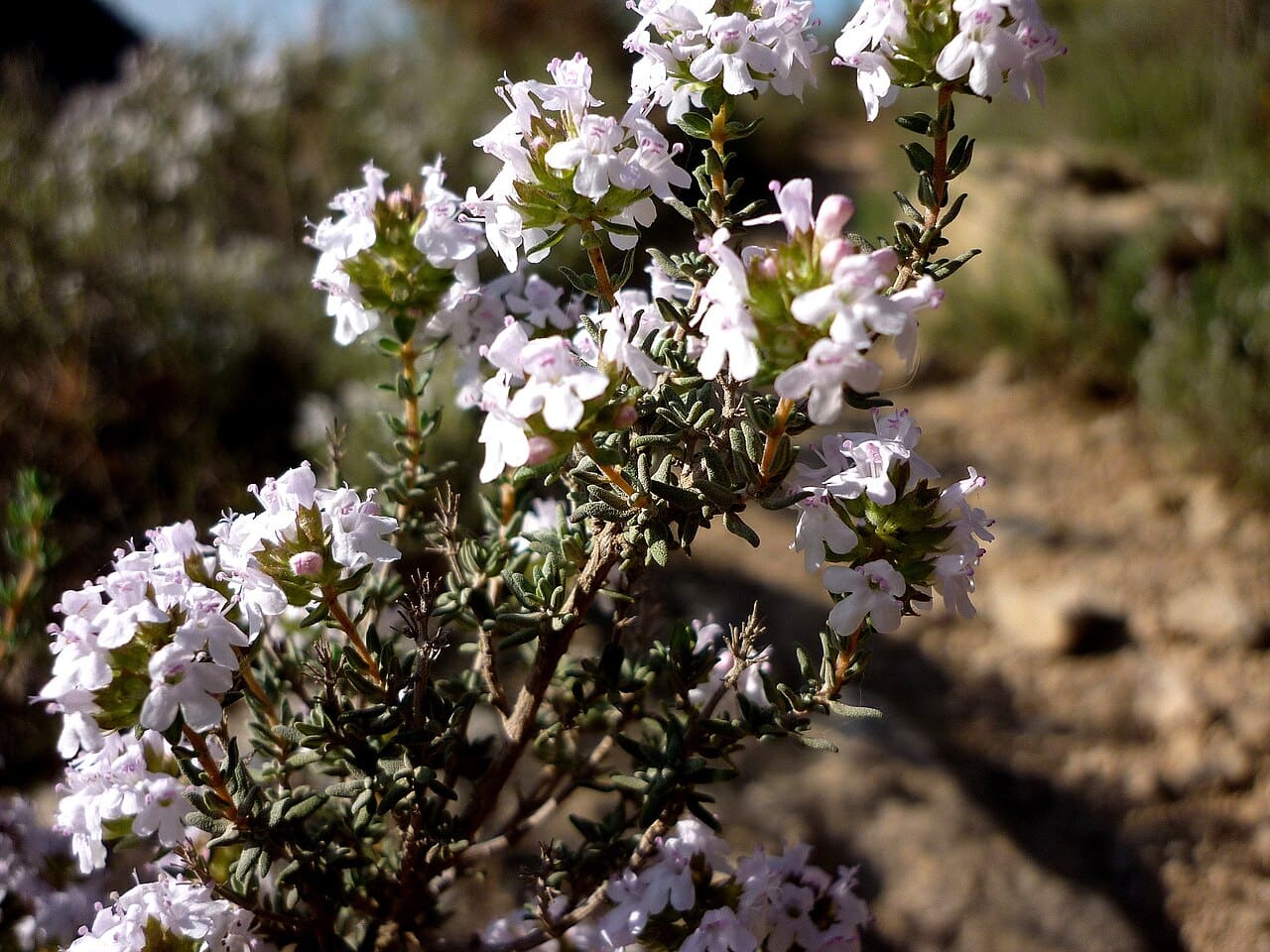
Thyme has been used for coughs for so long that the claim has outlived most of the people who might have checked it. In Europe someone eventually did. The European Medicines Agency’s committee on herbal medicines has assessed thyme, and its conclusion is narrower and more useful than most of what turns up under “thyme benefits”.
What European regulators accept
The Committee on Herbal Medicinal Products (HMPC) at the European Medicines Agency looks at plants with a long history of medicinal use and decides what, if anything, can be said about them. For thyme the committee assessed the leaves and flowers of Thymus vulgaris and Thymus zygis, and the preparations made from them: dried and cut herb, herbal tea, pressed juice and extracts.
Its conclusion, published as an EU herbal monograph in 2014, is that these preparations can be used for productive (chesty) coughs associated with colds.
That is the whole of the accepted use, and the way it was reached matters. The committee classed it as traditional use. Under EU rules this means there is not enough evidence from clinical trials to prove the effect, but the effect is plausible and the herb has been used safely for at least 30 years, including at least 15 within the EU. It is a recognition of long, uneventful use, not a finding that thyme cures anything.
The same assessment sets out the limits:
- Most thyme medicines are for adults and adolescents over 12; a few may be used in children over 4.
- If symptoms last longer than a week or get worse, a doctor or qualified healthcare practitioner should be consulted.
- People allergic to thyme or other plants of the mint family (Lamiaceae) should not use them.
- Stomach upsets have been reported.
In the UK, licensed traditional herbal medicines carry a THR mark on the pack, which shows the product meets the regulator’s standards for quality and safety information. A jar of dried thyme from the spice rack is food, not a licensed medicine, even though it is the same plant.
Thyme tea
Herbal tea is one of the preparations covered by the EMA assessment, so a cup of thyme tea for a chesty cold sits squarely within the traditional use the committee accepted. It is also simply a pleasant, savoury, slightly medicinal-tasting drink, and the thyme tea page covers how to make it from fresh or dried thyme and what it tastes like.
What the assessment does not do is support a longer list of claims for the tea: better sleep, weight loss, a stronger immune system, lower blood pressure. Those appear on wellness sites, often attributed to “studies” without names. None of them has been accepted by a regulator, and if a claim sounds like it would sell a supplement, that is usually where it came from.
Thyme oil
Thyme essential oil is a different product with a different risk profile. It is distilled from the flowering plant and concentrates its aromatic compounds, chiefly thymol and carvacrol, many times over.
The EMA committee assessed thyme oil separately. It accepts thyme oil medicines, again on the basis of traditional use, for the relief of cough and cold symptoms, taken by mouth or applied to the skin, and as a bath additive. The limits are tighter than for the herb:
- Thyme oil medicines taken by mouth or applied to the skin are for adults only; bath additives may be used in children over three.
- They must not be applied to the face.
- People with open wounds, extensive skin damage, acute skin disease, high fever, severe infection, serious circulatory problems, high blood pressure or heart failure should not take full hot baths with them.
- Allergic reactions and skin irritation have been reported.
Those conditions describe licensed medicines made to a standard. A small bottle of essential oil bought for aromatherapy is not one of them, and it should never be swallowed or put on skin undiluted. If you keep cats, keep thyme oil away from them altogether: the thyme and pets page explains why the oil and the plant are different questions.
What laboratory studies show, and what they do not
Thymol and carvacrol have been studied a great deal, and in laboratory tests they show antimicrobial activity: they slow or stop the growth of various bacteria and fungi in a dish. That is why thymol turns up in some mouthwashes, throat lozenges and household cleaning products.
It is a long step from a petri dish to a person. A compound that kills bacteria on a lab plate at a given concentration tells us little about what happens when a few leaves are eaten in a stew or steeped in a cup of tea, and regulators have not accepted thyme as a treatment for any infection. Infections that need treating need a doctor and, often, proper medicine.
Some studies also report antioxidant activity in thyme extracts. That is true of many herbs, spices, fruits and vegetables, and on its own it says little about health. The NHS advice on a balanced diet, built around fruit, vegetables, wholegrains and pulses, does far more than any single herb.
Thymol in everyday products
Even people who never cook with thyme meet its chemistry. Thymol, the compound that gives thyme much of its smell, is made both from thyme and by synthesis, and it appears in several familiar products.
Some well-known antiseptic mouthwashes list thymol among their active ingredients alongside eucalyptol and menthol. Thymol also turns up in throat lozenges, chest rubs and some household cleaning and disinfectant products, and beekeepers use thymol-based treatments against varroa mites in hives.
None of that turns a sprig of thyme into a medicine. The amounts in a manufactured product are measured and controlled, and the products are tested for the use on their label. What it does show is why thyme has such a long reputation: its main aromatic compound is genuinely active, and people have noticed that for centuries.
How to read a claim about thyme
Much of what is written about thyme online is written to sell something, and a few questions help sort it out.
Who is making the claim? A regulator such as the European Medicines Agency or the UK’s medicines regulator is a different source from a supplement shop or a wellness blog.
What was actually studied? A study of thyme oil in a laboratory dish, or of a concentrated extract in animals, tells you little about a cup of tea or a teaspoon of dried herb in a stew.
How strong is the claim? “Traditionally used for” is a careful, legally defined phrase. “Boosts”, “detoxes” and “cures” are not.
Is a product being sold alongside it? If the article ends with a link to buy capsules, the enthusiasm above it deserves a second look.
Applied to thyme, those questions lead back to the same modest conclusion as the regulators: a pleasant herb with a long, safe history of use for coughs and colds, and a great deal of kitchen value.
Thyme as food
Thyme is used in small amounts, a teaspoon of leaves or a few sprigs in a dish for several people. In those quantities it contributes flavour rather than any meaningful share of a day’s vitamins or minerals. That is no criticism. Herbs make plant-based cooking taste good, and food that tastes good is food people keep eating, which is a benefit of its own that needs no study to prove.
The cooking with thyme page is the place for that side of it: fresh against dried, how to store it, and which dishes it suits.
Allergy to thyme and its relatives
The EMA assessment names allergy to thyme, or to other plants of the mint family, as the reason not to use thyme medicines at all. The mint family, the Lamiaceae, is large and familiar: it includes mint, oregano, marjoram, basil, sage, rosemary, lavender and savory as well as thyme.
Allergy to these herbs is uncommon, but people who already react to one of them, with a rash, an itchy mouth or breathing symptoms, should be careful with the others, and especially with concentrated products such as oils and extracts. Contact dermatitis from handling herbs and oils is the more usual form, and it is one reason thyme oil must be diluted and kept off the face.
If eating a herb causes swelling of the lips, tongue or throat, or difficulty breathing, that is an emergency and needs urgent medical help.
Before using thyme as a remedy
A few plain points, none of which replaces advice from a pharmacist or doctor:
- Thyme in food is considered safe for most people. Medicinal amounts are a different matter in pregnancy and breastfeeding; ask a pharmacist first.
- If you take regular medication, mention herbal products to your pharmacist before using them, as you would with any other medicine.
- A cough with fever, breathlessness, chest pain or coloured phlegm, or one that lasts more than a week, needs a doctor rather than a herb.
- Children under 12 should only be given thyme preparations made and labelled for their age.
The thyme in the garden is, above all, a plant to grow, smell and cook with. If you want one of your own, how to grow thyme covers pots, soil and keeping it alive through a wet English winter.
Questions
What is thyme good for?
In the kitchen, flavour. As a medicine, the European Medicines Agency accepts thyme preparations, including herbal tea, as traditional herbal medicines for productive, chesty coughs that come with a cold. That acceptance rests on long and safe traditional use rather than on proof from clinical trials. Claims beyond that, from immunity to weight loss, are not supported by an assessment of the same standing.
Is thyme tea good for you?
Thyme tea is a pleasant herbal drink, and EMA lists herbal tea among the thyme preparations accepted for traditional use in chesty coughs with colds, for adults and adolescents over 12. If symptoms last more than a week or get worse, a doctor or pharmacist should be consulted. Anyone allergic to thyme or other plants of the mint family should avoid it, and stomach upsets have been reported.
Is thyme oil safe?
Thyme oil is far more concentrated than the herb and needs care. EMA accepts thyme oil medicines for coughs and colds when taken by mouth or applied to the skin by adults, and as bath additives for children over three. They must not be applied to the face, and allergic reactions and skin irritation have been reported. Undiluted oil from a shop is not a medicine and should not be swallowed.
Does thyme have proven antibacterial benefits?
Thymol and carvacrol, the main aromatic compounds in thyme, show antimicrobial activity in laboratory studies, which is why they appear in some mouthwashes and cleaning products. Laboratory activity is not the same as a proven benefit from eating thyme or drinking thyme tea, and no regulator has accepted thyme as a treatment for infections. An infection that needs treatment needs a doctor.