
Wild thyme field guide
Cooking with Thyme: Taste, Fresh vs Dried, Freezing and Rosemary
On this page13 sections
- What thyme tastes like
- Fresh or dried
- Storing fresh thyme
- Freezing thyme
- Drying your own
- Thyme against rosemary
- Where thyme earns its place in plant-based cooking
- Thyme with beans, tofu and grains
- Lemon thyme in the kitchen
- How much thyme to use
- Building a simple herb mix
- Thyme in baking and bread
- A note on thyme flowers
Fresh or dried: how much to use
| Fresh leaves | Dried thyme |
|---|---|
| 1 tsp | ⅓ tsp |
| 1 tbsp | 1 tsp |
| 2 tbsp | 2 tsp |
| 3 tbsp | 1 tbsp |
Wrapped loosely in barely damp kitchen paper, in a bag or box in the salad drawer. Thyme keeps longer than soft herbs such as basil or coriander. Wash it just before use.
Sprigs or stripped leaves in a sealed bag, or chopped into an ice-cube tray under olive oil. Use straight from frozen in cooked dishes; thawed leaves go limp.
Airtight, away from the stove, the sink and sunny windows. McCormick puts the shelf life of dried leafy herbs at about one to three years; after that the flavour fades rather than going off. Freezing does not make dried herbs last longer.
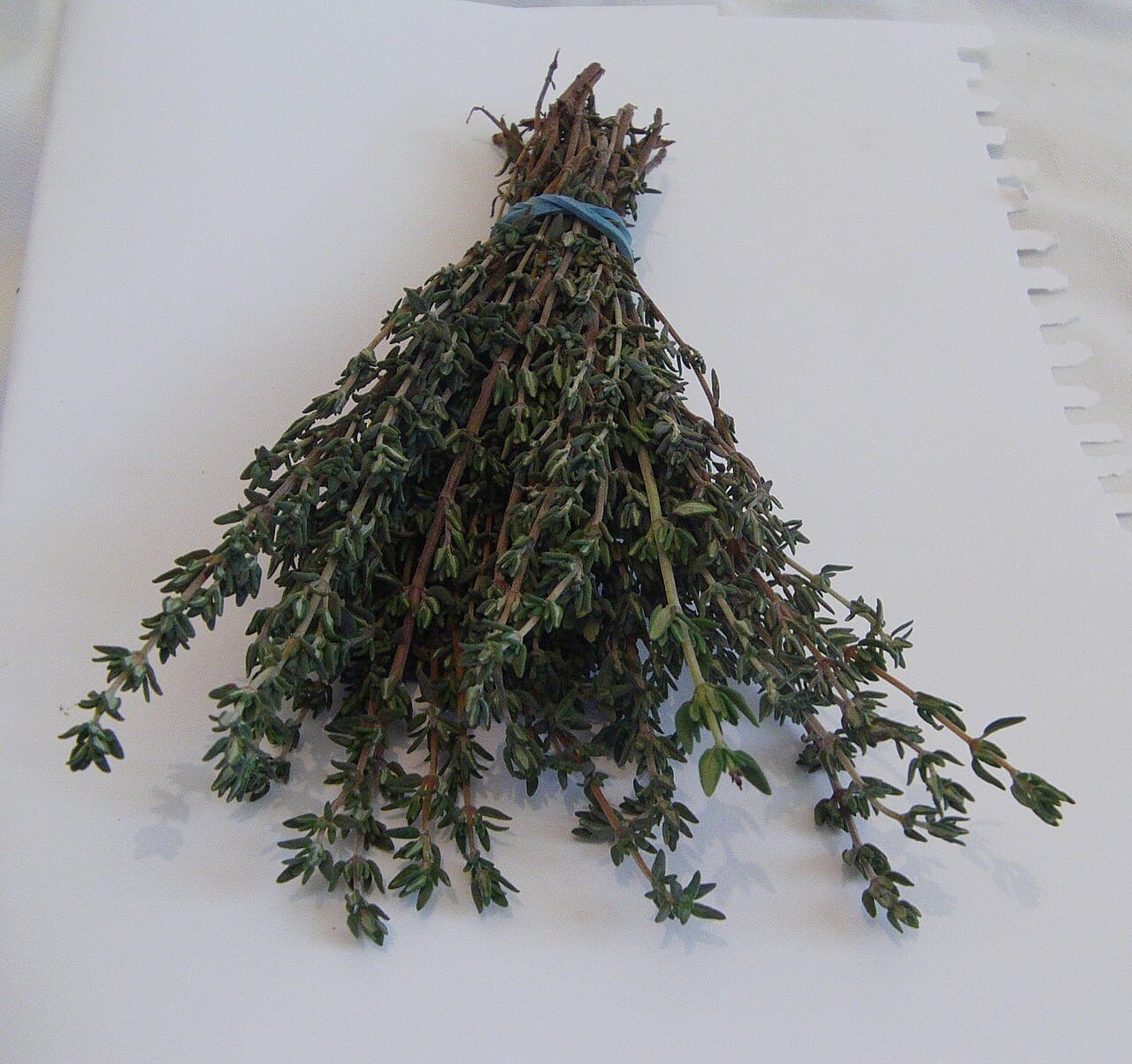
Strip a sprig the wrong way and you get a fistful of stalk. Run finger and thumb down the stem from the tip towards the cut end, against the direction the leaves grow, and they come away clean in one pull. Most of cooking with thyme is like that: small habits that make a quiet herb pull its weight.
What thyme tastes like
Thyme is savoury rather than sweet. The flavour is earthy, warm and slightly peppery, with a resinous, almost medicinal edge that comes from the same aromatic compounds that make the plant smell so strongly when walked on. It is a background herb in most cooking: few people notice thyme in a stew, but nearly everyone notices when it is missing.
Fresh thyme is greener and brighter, with a cleaner smell. Dried thyme is more concentrated and woodier, and it stands up well to long cooking. Lemon thyme has a clear citrus top note over the usual thyme flavour and is gentler, which makes it the one to use where thyme might otherwise dominate.
Fresh or dried
Both have their place, and dried thyme is one of the herbs that dries well, keeping much of its character in the jar.
The common kitchen rule is one part dried to three parts fresh: a teaspoon of dried leaves in place of a tablespoon of fresh. It is a rule of thumb, not a measurement. Dried herbs fade with time, so a jar that has been open since last Christmas may need a little more, and thyme is easier to add at the end than to remove.
Use dried for long-cooked dishes: bean and lentil stews, tomato sauces that simmer for an hour, braised vegetables, slow-roasted roots. Its flavour needs time and heat to open up.
Use fresh where the herb should be noticed: scattered over roast vegetables in the last minutes, stirred into a risotto at the end, folded into a dressing, or laid in sprigs on a tray of potatoes before they go in the oven.
Storing fresh thyme
Fresh thyme is tougher than soft herbs such as basil or coriander, but it still keeps best cool and slightly damp, not wet. Wrap the sprigs loosely in a barely damp piece of kitchen paper, put them in a bag or box, and keep them in the fridge salad drawer. Wash them just before using rather than before storing, since sitting water makes them go slimy.
A thyme plant on a sunny windowsill or outside the back door keeps longer still. The how to grow thyme page covers pots, compost and winter care.
Freezing thyme
Thyme freezes well, which is useful when a plant has outgrown the kitchen’s needs in midsummer.
- Sprigs or leaves in a bag: strip the leaves (or freeze whole sprigs), spread them on a tray to freeze, then tip them into a sealed bag. They stay loose and can be taken out a pinch at a time.
- In oil: chop the leaves, pack them into an ice-cube tray and top up with olive oil. One cube is enough to start a pan of onions or a soup.
Use frozen thyme straight from the freezer in cooked dishes. Thawed leaves go limp and dark, which does not matter in a stew but rules them out as a garnish.
Drying your own
To dry thyme from the garden, the RHS suggests hanging small bunches in a warm, dark, well-ventilated place for a few weeks, then stripping the leaves into an airtight jar. Thyme picked in late spring and summer, when the new growth has the best flavour, gives the best dried herb.
Thyme against rosemary
The two herbs turn up together in recipes so often that they are easy to treat as interchangeable. They are not quite.
Rosemary has needle-like leaves that stay tough even after cooking, and a strong, piney, camphor-like flavour. A little goes a long way, and too much turns bitter.
Thyme has tiny soft leaves that melt into a dish, and a gentler, earthier flavour that sits in the background.
They work well together in hearty cooking: roast potatoes, a tray of roots, a white bean stew. When one must stand in for the other, use rosemary at about half the quantity you would use of thyme, and chop it finely or remove the sprigs before serving. For a closer substitute in lighter dishes, the thyme substitutes page goes through oregano, marjoram, savory and herb mixes.
Where thyme earns its place in plant-based cooking
Thyme is especially useful in vegetarian and vegan food, where it supplies some of the savoury depth that stock bones or meat juices give in other cooking. A few places it does real work:
- Mushrooms. Thyme and mushrooms are one of the classic pairings. Fry mushrooms hard in olive oil, add garlic and fresh thyme leaves in the last minute, and finish with a squeeze of lemon.
- Beans and lentils. A couple of sprigs and a bay leaf in the pot while beans or lentils cook give the whole dish a backbone.
- Roast roots and squash. Thyme sprigs tucked among carrots, parsnips, beetroot or squash before roasting. The squash and pumpkins piece in the journal has more on autumn squash.
- Gravy and stuffing. Thyme is a traditional herb in sage-and-onion style stuffings and in onion gravy, both easy to make without meat.
- Bouquet garni. The classic French bundle of thyme, bay and parsley stalks, tied together and lifted out at the end, is one of the simplest ways to flavour a soup or stew.
- Herbes de Provence. Thyme is a main ingredient in this dried mix, which suits tomatoes, aubergines and courgettes.
Thyme with beans, tofu and grains
In vegetarian and vegan cooking thyme does some of the work that stock and slow-cooked meat do elsewhere, and it pairs especially well with the ingredients that carry plant-based meals.
Chickpeas and white beans take thyme beautifully. Warm a tin of drained beans in olive oil with garlic, lemon zest and fresh thyme leaves for a quick side or a filling for toast.
Tofu and tempeh benefit from a marinade with dried thyme, garlic, smoked paprika and a little soy sauce before roasting or frying, which gives them a savoury, herby crust.
Lentils, whether green, brown or Puy, cooked with a bay leaf and a couple of thyme sprigs make a good base for salads and stews.
Barley, spelt and rice cooked in stock with thyme and finished with butter or olive oil turn a plain grain into something that can stand on its own beside roast vegetables.
Lemon thyme in the kitchen
Lemon thyme is the friendliest thyme for anyone who finds common thyme too medicinal. It is good wherever lemon and herbs both belong:
- stirred through a bowl of new potatoes with olive oil and spring onion;
- in a dressing for a grain or bean salad;
- scattered over roast courgettes or asparagus in early summer;
- in baking, where its citrus note suits shortbread, lemon drizzle-style cakes and fruit crumbles.
Add it late. Its lemon character fades with long cooking, so it is better as a finishing herb than a simmering one. The lemon thyme page covers the varieties and how to grow it.
How much thyme to use
Thyme is forgiving, but a few rough measures help when a recipe is vague or there is no recipe at all.
For a pot of soup or stew for four to six people, two or three sprigs of fresh thyme, or about a teaspoon of dried, is a sensible starting point. Add the sprigs whole and fish out the bare stalks before serving; the leaves will have fallen off into the pot during cooking.
For a tray of roast vegetables, scatter the leaves from four or five sprigs, or tuck whole sprigs among the vegetables and let them crisp. For a dressing or a finishing herb, a teaspoon of chopped fresh leaves is plenty for a large bowl.
Taste before adding more. Thyme builds as it cooks, and a stew that seems under-seasoned at the start can be strongly herbal after an hour.
Building a simple herb mix
Thyme rarely works alone. In British and French cooking it is usually one part of a small group of herbs, each doing a different job:
- Thyme and bay for long-cooked beans, lentils, stocks and stews, the backbone of a bouquet garni.
- Thyme and sage for stuffing, roast onions and squash, where the two together give the familiar Sunday-roast smell.
- Thyme, oregano and a little rosemary for tomato sauces, roast Mediterranean vegetables and bean bakes.
- Lemon thyme and parsley for summer salads, new potatoes and grains, where something fresher is wanted.
A small jar of dried thyme, oregano and sage, with a bay tree or a packet of bay leaves, covers most of these. Fresh thyme from a pot outside the door covers the rest.
Thyme in baking and bread
Thyme is not only a savoury-pot herb. Chopped fresh leaves work in soda bread, focaccia and savoury scones, and they go well in a crumble topping for a tray of roast tomatoes or root vegetables. Lemon thyme suits sweet baking too, in shortbread, plain sponge cakes and with baked fruit such as plums, apricots and figs, where its citrus note keeps the herb from tasting out of place.
When baking, chop the leaves finely, since whole leaves can catch and burn on the surface of a loaf.
A note on thyme flowers
Thyme flowers are edible and taste like a milder version of the leaves. Scattered over a salad or a bowl of soup in early summer they look pretty and do no harm, though most cooks pick thyme before it flowers, when the leaves are at their best.
If a plant has gone to flower, picking the flowering stems and trimming lightly afterwards keeps it compact, and the bees will have had their share by then.
Questions
What does thyme taste like?
Thyme tastes savoury, earthy and slightly peppery, with a warm, resinous edge and a faintly minty, medicinal note that comes from the same aromatic oils that give it its smell. Fresh thyme is brighter and greener; dried thyme is more concentrated and woody. Lemon thyme adds a clear citrus top note, which makes it gentler than common thyme.
How much dried thyme equals fresh thyme?
The usual kitchen rule is one part dried to three parts fresh, so one teaspoon of dried leaves for one tablespoon of fresh. Treat it as a starting point rather than an exact conversion: dried herbs lose strength in the jar, so an old jar may need a little more, and it is easier to add thyme at the end than to take it out.
Can you freeze fresh thyme?
Yes, thyme freezes well. Freeze whole sprigs or stripped leaves in a sealed bag, or chop the leaves into an ice-cube tray topped up with olive oil. Frozen thyme is best added straight from the freezer to dishes that will be cooked, such as soups, stews, roasting tins and sauces, since it loses its texture on thawing and is no longer useful as a garnish.
Can I use rosemary instead of thyme?
In hearty, slow-cooked dishes such as roast vegetables, bean stews and gravies, yes, but use less: rosemary is stronger, more piney and can turn bitter if overdone. Its needle-like leaves also stay tough, so chop them finely or use whole sprigs and remove them. For delicate dishes, marjoram or a mix of herbs is a closer match.