
Wild thyme field guide
Lemon Thyme: Varieties, Growing and Cooking with Thymus × citriodorus
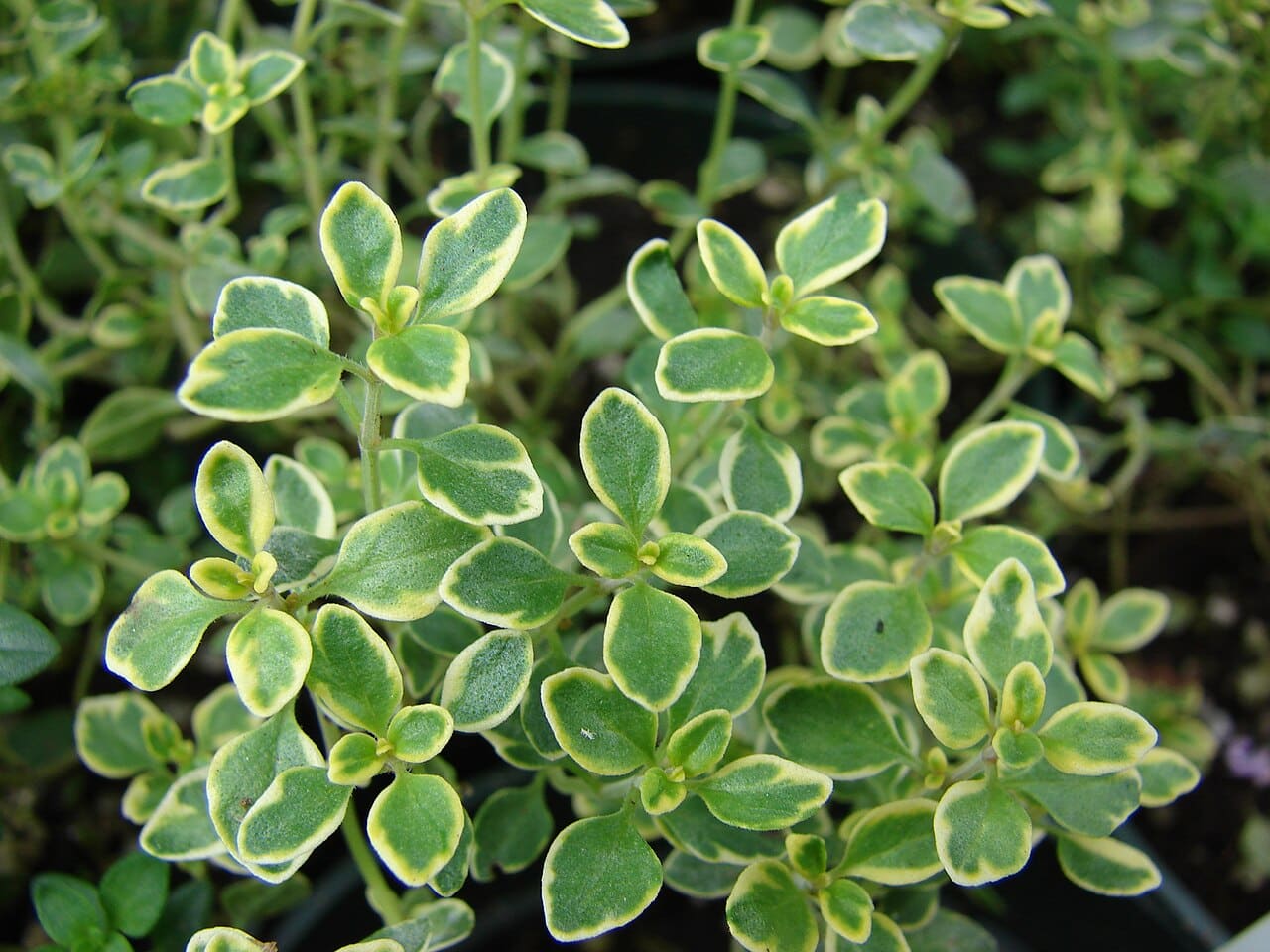
Run a hand over a lemon thyme plant on a warm afternoon in July and the first smell is citrus, sharp enough to be mistaken for lemon balm, followed a second later by the familiar resinous note of ordinary thyme. That double scent is the whole reason to grow it. The leaves look much like common thyme, the flowers are the same small mauve-pink clusters, and yet in a dish it behaves differently enough to earn its own patch of the herb bed.
Where lemon thyme sits among the thymes
Botanically it is usually written Thymus × citriodorus. The International Plant Names Index records it as a hybrid between broad-leaved thyme, Thymus pulegioides, and common thyme, Thymus vulgaris. That parentage is the standard account, though its hybrid status has been disputed and later studies have pulled in different directions. For a gardener the practical point is simpler: plants sold as “lemon thyme” are not a tidy single species, and labels in nurseries vary.
The RHS plant database shows how tangled the naming gets. ‘Doone Valley’, the low thyme with gold-splashed dark leaves, carries Thymus citriodorus ‘Doone Valley’ as a synonym. The golden-leaved, lemon-scented ‘Aureus’ is filed by the RHS under Thymus pulegioides, with the citriodorus name listed only as a synonym. So a plant labelled one way at one nursery may appear under a different species name at the next, and both can be honest.
None of this has much to do with the native wild thyme of Breckland heaths and chalk banks, which is a different, low, mat-forming plant without any lemon scent. The wild thyme guide covers those.
Varieties worth looking for
Four names come up again and again in RHS listings and catalogues, and they differ more in leaf colour and habit than in flavour.
‘Silver Queen’ is the best known. The RHS describes a bushy, dwarf evergreen shrub reaching about 30cm, with small dark green leaves edged in creamy white and clusters of pale mauve-pink flowers in summer. It holds the RHS Award of Garden Merit and is listed as a plant for pollinators. Those pale margins make it one of the more ornamental thymes for a pot or the front of a border, and the lemon scent is clear when the leaves are crushed.
‘Archer’s Gold’ grows to about 20cm, a bushy subshrub with small lime-green leaves that carry the lemon scent. It brightens a gravel garden in winter, when most herbs look tired.
‘Lemon Curd’ is the variety the RHS picks out in its thyme growing guide as a low-growing lemon thyme with lemon-scented, lemon-flavoured leaves. It sprawls more than it climbs, which makes it a good choice for the edge of a raised bed where stems can trail over.
‘Aureus’, as above, is the golden form the RHS lists under broad-leaved thyme: a bushy shrublet to about 20cm, with bright yellow lemon-scented leaves and pale lilac flowers, spreading and opening up with age.
A plain green lemon thyme, sold simply as Thymus × citriodorus, is the straightforward choice for a cook who cares more about the leaves than the look.
What it needs to grow well
Lemon thyme wants the same things as other culinary thymes, only more so. The RHS describes the species as preferring well-drained, neutral to alkaline soil in full sun, and as unable to tolerate wet or waterlogged ground. Its general thyme advice is to choose a warm, sunny spot with light soil and to space plants around 20–30cm apart.
Much of Norfolk suits that well. The light sandy soils of Breckland give thyme exactly what it likes, while heavier clay soils, which turn up in plenty of Norfolk gardens, hold too much winter water for comfort. Cold is rarely the killer. A plant that sails through a frosty week in January can still rot at the roots in a mild, wet February.
In a container
The RHS recommends a pot at least 15cm wide and 10cm deep per plant, with plenty of drainage holes, filled with peat-free soil-based compost mixed with horticultural grit at up to a quarter of the volume. Lemon thyme does well this way, and a pot can be moved close to the kitchen door in summer and tucked against a house wall, out of the worst of the rain, from late autumn.
Watering and feeding
Once established, thyme is drought tolerant and seldom needs watering in the ground. Pots dry out faster in hot spells and need a drink then. It needs little or no feeding.
Where to put it in the garden
Lemon thyme earns a place close to wherever food is cooked, simply because leaves picked a minute before use taste best. Beyond that, it suits the front of a sunny border, the gaps in a gravel path, the top of a dry retaining wall, or a strawberry planter with side pockets, where every plant gets sun and water drains away quickly. The RHS lists ‘Silver Queen’ as a plant for pollinators, and in June and July the flowers draw bees in numbers that make a small clump surprisingly busy.
It also mixes well with other Mediterranean herbs that want the same treatment. Sage, rosemary and oregano share its liking for poor, sharply drained soil and full sun, so a single raised bed of the four can be watered and fed the same way, which in practice means hardly at all. Mint is the herb to keep away, because it wants moist soil and will run through a thyme planting within a season.
Gardeners who already grow creeping thymes sometimes use a variegated lemon thyme as a taller accent among them. The creeping thyme guide lists the low mat-forming varieties that pair well with it.
Trimming, and why plants get leggy
Lemon thyme is a small shrub, and like most shrubby thymes it turns woody at the base after a few years, with bare stems and leaves only at the tips. The RHS suggests a light trim in mid- to late spring and again soon after flowering, keeping cuts within the leafy growth. Cutting hard into old bare wood is risky, as those stems may not reshoot. When a plant has become straggly beyond saving, the RHS view is that replacing it is usually best, which is where cuttings come in.
Variegated plants sometimes throw out a shoot with plain green leaves. It is worth snipping these off at the base, because green shoots grow more strongly and can gradually take over a ‘Silver Queen’.
Making more plants from cuttings
Seed is not a useful route. Named varieties do not reliably come true, so a packet of seed would not give you ‘Silver Queen’ or ‘Archer’s Gold’ back, and lemon thyme is mostly sold as plants anyway. Cuttings copy the parent exactly.
The RHS describes two timings: softwood cuttings from new growth in spring or early summer, and semi-ripe cuttings in summer. Take short non-flowering shoot tips, strip the lower leaves, and push them into a pot of gritty, free-draining compost. Keep them out of direct sun and just moist rather than wet, since the same rot that troubles old plants in winter will finish off a cutting kept too damp. Rooted pieces can be potted on individually and planted out the following spring.
Layering is a slower alternative. Peg a low stem onto the soil in spring or autumn, and it will often root where it touches; the RHS also notes that rooted stems can sometimes be found ready-made around the edge of an established plant.
For culinary thyme raised the other way, from a packet, see the guide to growing thyme from seed.
Cooking with it
The lemon note is volatile. It is strongest in fresh leaves picked in late spring and summer, which the RHS identifies as the best-flavoured growth of any thyme, and it weakens with long cooking. That shapes how lemon thyme is best used: added towards the end, scattered over a finished dish, or steeped briefly in something warm.
It works well with the vegetables that turn up in Norfolk through summer and early autumn. New potatoes tossed in butter or oil with a handful of the leaves, courgettes roasted until browned, mushrooms fried hard with garlic, or a tray of carrots all benefit from it, and the season-by-season produce calendar is a good prompt for what is local at the time. It also suits white beans, lentil salads, and simple dressings of oil, mustard and vinegar. A few leaves stirred through a risotto in its last minute, or chopped into a herb butter for corn on the cob in August, show off the citrus side without anyone needing to be told what it is. Tofu or halloumi marinated briefly with oil, garlic and lemon thyme before going on a hot pan is another easy way in.
In sweet cooking the citrus side takes over. Lemon thyme is used in shortbread, in syrups for fruit, and in sugar left to stand with a few sprigs for a week or so. The flowers carry a similar flavour to the leaves and can go over salads or desserts as they are.
Sprigs steeped in hot water make a pale, faintly lemony drink. The thyme tea guide goes into making and tasting it, including which thymes give the most pleasant cup.
For drying, the RHS advice for thyme in general is to hang sprigs in a warm, dark, airy place for a few weeks and then store the dried leaves in an airtight jar. Dried leaves are useful in winter, but the lemon side is a fresh-leaf pleasure, so a pot kept going through the year is the better plan.
Swapping it in, and swapping it out
When a recipe asks for lemon thyme and only common thyme is to hand, common thyme with a little finely grated lemon zest gets close. The reverse swap works in most savoury dishes, with the result slightly brighter. For dishes where thyme of any kind is missing, the thyme substitutes guide has the alternatives.
An aside on names: “lemon thyme” turns up as a label for more than one plant in garden centres, and caraway thyme and orange-scented thyme (T. fragrantissimus, also mentioned by the RHS) sit on the same benches. Crush a leaf before buying; the nose settles in a second what the label may not.
Problems to expect
Grown in sun and sharp drainage, lemon thyme is usually trouble-free. The main losses, as with every thyme, are root rot in wet winter soil. Slugs and snails may nibble young shoots in spring, and rosemary beetle and leafhoppers can mark leaves without doing lasting harm.
The RHS thyme growing guide and its profile of Thymus ‘Silver Queen’ give the details behind the advice above. If you have room for only one plant, a plain green lemon thyme in a 20cm terracotta pot by the back door, trimmed after it flowers in July, will give more leaves for the kitchen than any of the coloured forms.
Questions
What is the botanical name of lemon thyme?
Lemon thyme is usually listed as Thymus × citriodorus. The × marks it as a hybrid, and the International Plant Names Index gives its parents as broad-leaved thyme (Thymus pulegioides) and common thyme (Thymus vulgaris). That status has been questioned, and some nurseries still sell it as Thymus citriodorus without the ×. Several lemon-scented plants are also filed by the RHS under Thymus pulegioides, so the label can vary between growers.
Can lemon thyme be grown from seed?
It is normally sold as plants, and the named forms such as 'Silver Queen' do not come true from seed. The reliable way to make more is to take softwood cuttings from new growth in spring or early summer, or semi-ripe cuttings later in summer. A rooted cutting gives an exact copy of the parent, including variegated or golden leaves, which seedlings would not keep.
Is lemon thyme hardy in the UK?
The RHS rates the commonly sold cultivars such as 'Silver Queen' as H5, hardy through most British winters. The bigger risk is wet rather than cold: roots rot in soil that stays soggy from November to March. In heavy ground, grow it in a container or raised bed with gritty compost, and move pots into a rain shadow next to a wall for winter.
How do you use lemon thyme in cooking?
Strip the small leaves from the stems and add them near the end of cooking, since the citrus note fades with long heat. It suits roasted vegetables, mushrooms, buttered new potatoes, bean dishes, dressings, and baking where a lemony herb lifts a sweet dough. Whole sprigs can infuse syrups, oils or a pot of hot water for a herbal drink, then be lifted out before serving.