
Wild thyme field guide
Thyme Tea: How to Make It, How Long to Steep It and How It Tastes
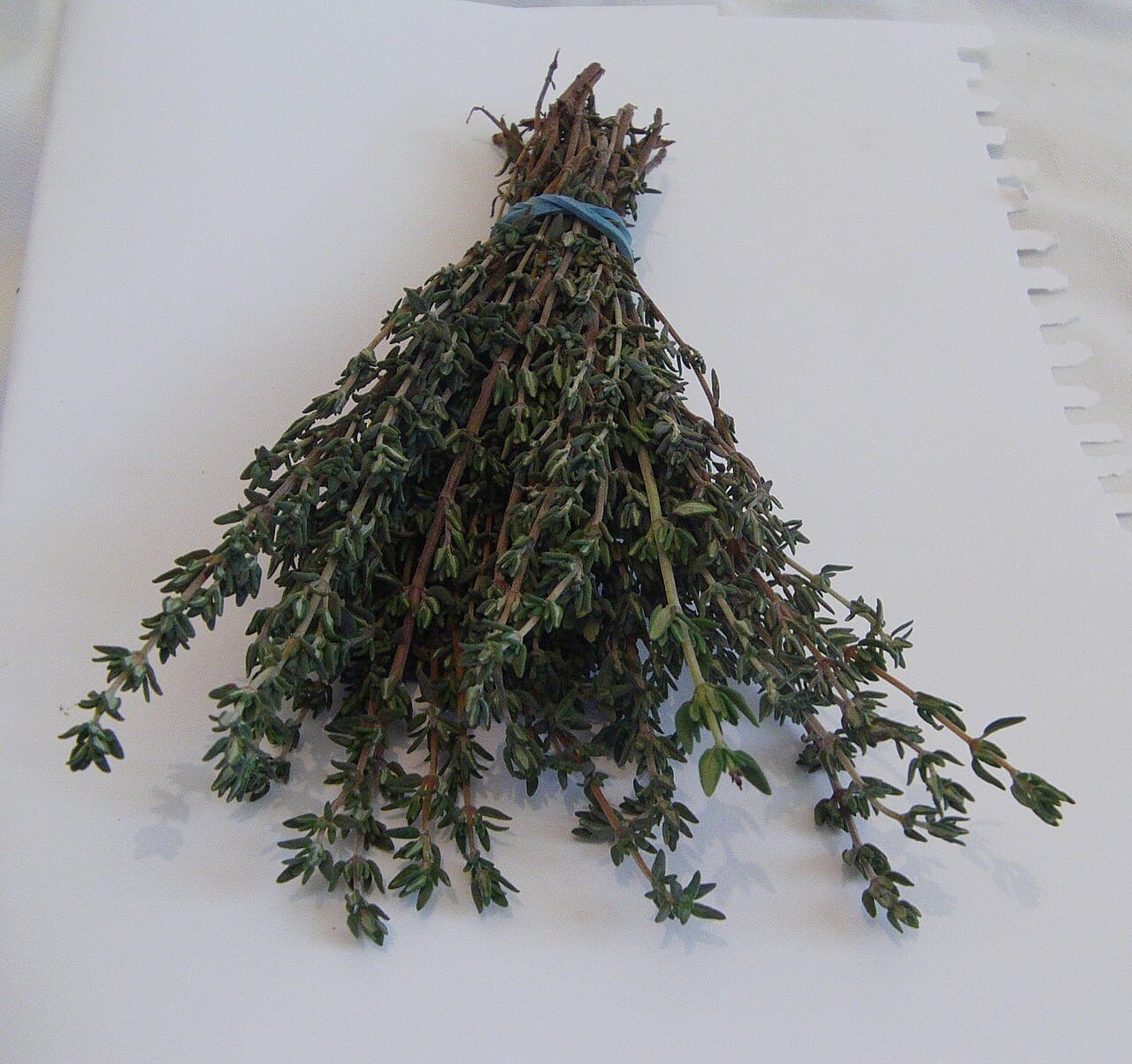
A pot of common thyme on a sunny Norwich windowsill in late August is usually at its leafiest, with soft green tips that strip off the stem between finger and thumb and leave the kitchen smelling faintly of a Sunday roast. That smell is most of what thyme tea tastes of. It is a savoury, warming drink rather than a sweet one, and the method is short enough to learn from one attempt.
What goes into the cup
Very little. Thyme, water that has just come off the boil, and a lid or saucer to trap the steam. Some people add a slice of lemon, a spoonful of honey or a thin coin of fresh ginger, but none of these is needed, and it is worth tasting the plain version first so you know what the herb itself contributes.
The thyme can be fresh or dried. It can come from a supermarket packet, a pot on the patio or a mat of creeping thyme at the edge of a gravel path, and each source gives a slightly different cup. Common thyme, Thymus vulgaris, is the strongest and most familiar. For the native and garden kinds and how they differ, the wild thyme guide is the place to start. Lemon thyme makes a softer, brighter drink that suits people who find plain thyme too much like gravy, and it has its own page on lemon thyme covering varieties and growing.
A teapot is useful if more than one person is drinking, but a mug with a saucer on top does the same job. A small strainer helps with dried leaves, which are tiny and float.
Fresh sprigs or dried leaves
Fresh thyme gives a cleaner, greener flavour with a little sweetness. Pick the soft upper shoots rather than the woody base of the plant; the RHS notes that the soft new growth of late spring and summer has the best flavour, and that leaves can be picked at any time of year. Rinse the sprigs under the cold tap and shake them dry. There is no need to strip the leaves off, because the stems go into the water whole and come out again at the end.
Dried thyme is more concentrated, a little dustier and more resinous. It is the practical choice from November to March, when outdoor plants have stopped growing and the leaves left on them are small and tough. Shop-bought dried thyme varies a lot in age. A jar that has sat in a warm cupboard for two years will make a flat, hay-like tea however long it steeps, so smell it before using it. If a pinch rubbed between the palms barely smells, the tea will be faint too.
Homegrown thyme dries easily. The RHS guide to growing thyme suggests hanging sprigs in a warm, dark, well-ventilated place for a few weeks and then keeping the fully dried leaves in an airtight jar. An airing cupboard is too humid in some houses; a shelf in a dry spare room usually works better.
Steeping times, as a starting point
The figures below are a place to begin, not a rule. Thyme from different plants, and even from the same plant in different months, varies in strength, so adjust after the first cup.
For a mug of roughly 300 ml, three or four fresh sprigs about the length of a finger, or about a level teaspoon of dried leaves, is a reasonable first measure. Pour on water just off the boil, cover immediately and leave it for around five minutes. Taste. For a stronger cup, give it another three to five minutes, then remove the thyme.
Covering matters more than people expect. The smell that fills the room when hot water hits the thyme is the flavour leaving the cup, and a saucer over the mug keeps much of it in.
Long steeping is where most bad cups of thyme tea come from. After about ten minutes the drink stops getting more aromatic and starts getting more bitter, with a sharp, throat-catching edge. More flavour comes from more thyme, not more time. A second, weaker cup can be made from the same fresh sprigs, though dried leaves rarely have much left to give.
Cold-brewing is possible: a few sprigs in a jug of cold water in the fridge overnight produce a pale, gentle drink that is pleasant on a hot day in July. It tastes noticeably different from the hot version, softer and more herbal, with less of the peppery top note.
What thyme tea actually tastes like
Plain thyme tea from common thyme is savoury first. The dominant note is the warm, slightly peppery, faintly medicinal scent that comes largely from thymol, the aromatic compound that gives culinary thyme its sharpness. Behind that there is a green, woody flavour, a little like the stalks of fresh herbs, and in a well-made cup a mild sweetness at the finish.
People who expect something like chamomile or peppermint are often surprised by how savoury it is. It sits closer to a light broth than to a fruit infusion, and it is one of the few herbal teas that goes well with a slice of buttered toast or a bowl of soup. A small spoonful of honey rounds off the sharp edge without hiding it. Lemon juice brightens it, though too much makes it taste thin.
Lemon thyme tea is a different drink altogether: citrus on the nose, gentler on the tongue, with much less of the medicinal note. Creeping thymes sold for ground cover, such as cultivars of Thymus serpyllum, tend to be milder again and slightly grassy. They are perfectly edible, but it takes a larger handful to reach the same depth of flavour, and the stems are fiddly. The creeping thyme page lists varieties for anyone who wants a ground cover that does double duty.
The flowers are edible too, and the RHS notes they taste similar to the leaves. A few pink or white flower heads dropped into a glass teapot look pretty and add very little else.
Garden thyme or foraged thyme
For tea, garden thyme is the better source almost every time. It is stronger, cleaner and easier to gather in quantity, and a single healthy plant of common thyme can supply a steady trickle of cups from late spring into autumn. Raising plants from scratch takes patience, as the guide to growing thyme from seed explains, as seed-sown thyme can take about a year before it is big enough to pick from regularly, but plants are cheap and widely sold.
Wild thyme in Britain is a different matter. The common native species, usually called Thymus polytrichus (formerly T. drucei), grows in short turf on chalk and limestone grassland, heaths and dunes, flowering roughly from June into September. In the Brecks of south-west Norfolk and north-west Suffolk there is also Breckland thyme, Thymus serpyllum in the strict sense, a plant the BSBI classes as rare in Great Britain and which is confined to dry sandy heaths and grassland over chalk. It grows at reserves such as Thetford Heath, a National Nature Reserve managed by Norfolk Wildlife Trust. Leave it alone. A rare plant on a protected heath is not a tea ingredient.
The law here is straightforward. Under section 13 of the Wildlife and Countryside Act 1981, uprooting any wild plant without the permission of the landowner or occupier is an offence, and a set of listed species may not be picked at all. Picking a few shoots of a common plant is a lighter matter in law, but reserves, Sites of Special Scientific Interest and National Nature Reserves have their own rules, and many forbid taking anything. On open land with no such restrictions, the accepted practice is to take only from large, healthy patches, to snip shoot tips rather than tug at the mat, and to leave the flowers for insects.
One small diversion, because it explains why so many conservationists care about short thyme turf. In Britain the large blue butterfly lays its eggs on wild thyme flower buds, and its caterpillars later finish their growth inside the nests of a red ant, Myrmica sabuleti. The butterfly died out in Britain in 1979 and was later reintroduced to sites in Somerset and Gloucestershire. It is not a Norfolk insect, and nobody picking thyme on a Breckland verge is going to disturb one, but it is the reason a patch of thyme on a sunny bank can matter far more than its size suggests.
Health, herbal teas and a word of caution
Thyme has been traditionally used in home remedies for coughs and sore throats, and a warm cup of something aromatic is a familiar comfort on a cold evening. That is as far as this guide goes. It makes no claims about what thyme tea does in the body, and nothing here is medical advice.
The practical point is simple.
If you are pregnant, breastfeeding, trying to conceive, taking regular medication or living with a long-term condition, check with a pharmacist before drinking herbal teas regularly. The NHS advice on medicines in pregnancy makes the same point about herbal remedies in general: natural does not automatically mean safe, and a midwife, GP or pharmacist should know about any remedy being taken. A pharmacist is easy to ask and does not need an appointment.
Concentrated thyme products such as essential oils are not the same thing as a cup of leaf tea and should never be added to a drink.
Keeping a supply through the year
Thyme tea is a drink of two seasons. From May to September there is fresh thyme on outdoor plants, at its softest and most fragrant in early summer before the plants flower. From October onwards the growth slows, and by midwinter the dried jar does most of the work. The what’s in season calendar shows where herbs sit alongside the rest of the British growing year.
The easiest way to bridge the gap is to cut a generous bundle in July or August, when plants are full, dry it in small bunches and fill one jar for the kitchen and one for tea. Label the tea jar with the month it was filled. Dried thyme does not go off in a dangerous way, but by the following summer it will be noticeably weaker, and that is a good moment to replace it from the new season’s growth.
A mixed jar is worth trying once the plain version is familiar: two parts common thyme to one part lemon thyme makes a rounder cup than either alone, and a few dried leaves of lemon balm or mint push it towards something lighter. For a first proper comparison, make two mugs side by side on the same afternoon, one with fresh sprigs and one with dried leaves, steep both for five minutes under a saucer, and notice which one gets finished first.
Questions
How much thyme do I need for one mug of thyme tea?
A good starting point is three or four fresh sprigs about the length of a finger, or roughly a level teaspoon of dried leaves, for a standard mug of just-boiled water. Taste after five minutes. If it is thin, use more thyme next time rather than leaving the same amount to stew for longer, which tends to bring out a bitter, slightly medicinal edge.
Can I use creeping thyme or wild thyme for tea?
Creeping and wild thymes are edible, but most have a milder, grassier flavour than common thyme, so you need more of them. Garden plants are the sensible source. Picking a few shoots from plentiful wild plants is not the same as uprooting, which is an offence without the landowner's permission, and nature reserves often forbid picking altogether.
Is thyme tea safe to drink every day?
Thyme is a common kitchen herb, and a cup of thyme tea now and then is an ordinary drink for most adults. Anyone who is pregnant, breastfeeding, taking regular medication or managing a health condition should ask a pharmacist before drinking any herbal tea regularly. This guide describes how the tea is made and how it tastes, not what it might do for your health.
Should thyme tea be made with boiling water?
Water just off the boil works well for both fresh and dried thyme. Pour it over the leaves, cover the mug or pot straight away so the aromatic oils stay in the cup instead of drifting off with the steam, then lift the sprigs out once the flavour suits you. Very long steeping is the usual reason for a harsh cup.