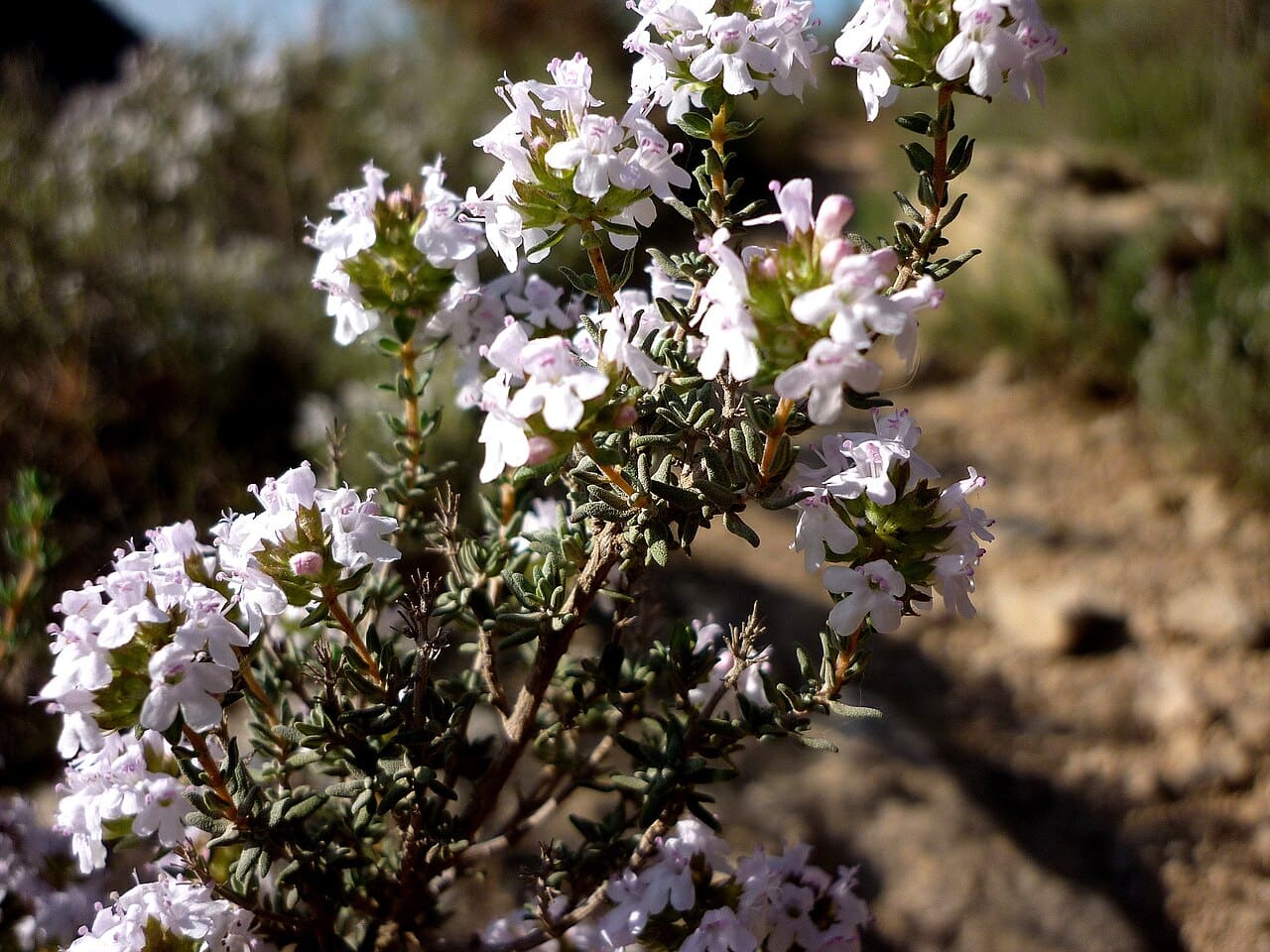
Most thyme that dies in a British garden drowns. It is a plant of hot, dry, stony hillsides, and the commonest mistake is to treat it like the basil and parsley beside it on the windowsill: rich compost, regular watering, a shady corner. Give it sun, grit and neglect, and it will usually outlast the gardener’s patience for it.
What follows draws on the Royal Horticultural Society’s growing advice for thyme, which is the clearest single source for British conditions.
Is thyme a perennial?
Yes. Thymes are evergreen perennials. The upright kitchen thymes, such as common thyme and lemon thyme, are small woody shrubs; the creeping kinds form long-lived mats that root as they spread. Most varieties sold in UK garden centres are hardy enough to live outdoors all year, though a few less common species need winter shelter, and it is worth checking the label.
Perennial does not mean immortal. After several years shrubby thymes tend to become woody, bare at the base and straggly, and since they rarely regrow from old wood, the RHS suggests replacing old plants rather than cutting them back hard. Taking cuttings from a favourite plant before it gets to that stage keeps the same plant going.
Where to plant it
Thyme needs sun and drainage above all else. The RHS puts it simply: a warm, sunny spot with light, well-drained soil. In practice that means the sunniest bed, the front of a south-facing border, a gravel garden, a rockery, or the gaps in a sunny path or patio.
Heavy clay and damp ground are the problems. If that is what you have, grow thyme in pots or raised beds, or dig plenty of grit into a small planting area so water drains away fast. The sandy soils of the Brecks and much of light-soiled Norfolk suit thyme naturally, which is part of why it grows wild there.
When to plant
Plant thyme out from mid-spring to early summer. That gives the roots the whole growing season to establish before the first winter, which is when young plants are most at risk. Plants raised indoors from seed need hardening off, a week or two of standing outside by day and coming in at night, before they go into the ground.
The same timing applies to creeping thyme, whether it is going into a rockery, between paving or into a creeping thyme lawn.
Spacing: 20 to 30 centimetres apart, depending on how big the variety grows. Set each plant at the same depth it was growing in its pot.
Growing thyme in pots
Pots suit thyme very well, because you control the drainage and can move the plant into the sun or out of the rain.
- Size: at least 15 centimetres wide and 10 centimetres deep per plant, with plenty of drainage holes.
- Compost: peat-free soil-based compost mixed with up to 25 per cent horticultural grit. Avoid rich, moisture-holding multipurpose compost on its own.
- Position: the sunniest place you have. A south-facing windowsill indoors works for a while, but thyme grows stronger and tastier outside.
- Watering: only when the compost has dried out. Pots dry faster than borders in hot weather, so check them in summer; in winter they rarely need water at all.
Raising the pot on feet or bricks so it does not stand in a puddle helps more than people expect.
Watering and feeding
Established thyme in the ground hardly ever needs watering, except in long hot spells or when newly planted. The RHS is clear that overwatering is the bigger danger, because thyme roots rot in damp conditions.
Feeding is not usually necessary. Thyme grows best and tastes strongest in lean soil, and rich feeding produces soft, sappy growth with less flavour.
Trimming
A light trim keeps thyme compact and stops it going bare in the middle.
- Shrubby thymes (common and lemon thyme): trim lightly in mid to late spring and again soon after flowering.
- Creeping thymes: just a very light trim after flowering to remove the dead flower heads.
- Never cut back into old, bare wood. The stems may not reshoot, and a hard prune is the quickest way to lose a thyme plant.
Regular picking for the kitchen does much of this job anyway.
Growing thyme from seed, cuttings and division
Thyme is easy to grow from seed, though slow: seed-grown plants can take about a year to be ready to pick. The growing thyme from seed page covers sowing in detail, including the fact that thyme seed needs light to germinate and should not be covered.
For named varieties, take cuttings instead, because plants grown from seed collected from a named variety are unlikely to match the parent. The RHS lists several methods:
- Softwood cuttings in spring or early summer.
- Semi-ripe cuttings in summer.
- Layering in spring or autumn: peg a low stem down onto the soil and it will root where it touches.
- Division in spring or autumn, which works best for creeping, mat-forming thymes.
Getting thyme through winter
Most widely sold thymes withstand frost and ordinary British winters. As with summer watering, the danger is wet, not cold.
- In high-rainfall areas or very wet winters, cover plants in the ground with a cloche.
- Move pots to a sheltered spot, against a house wall or under the eaves, and stop watering them.
- Grow less hardy kinds, such as Thymus cilicicus, in containers that can go into a greenhouse or porch for winter.
Some creeping thymes turn bronze or purple in cold weather. That is normal and they green up again in spring.
Woolly thyme
Woolly thyme, Thymus pseudolanuginosus, deserves a note of its own because it behaves a little differently. It is grown for its leaves, which are densely covered in grey hairs, and it forms one of the flattest mats of any thyme, ideal between paving stones and on rock gardens. It flowers sparingly and is not a kitchen herb.
Plants with hairy grey leaves generally dislike winter wet more than green-leaved ones, and woolly thyme is no exception. Grow it in the sharpest-draining spot you have, with grit around the crown, and do not plant it where water lies after rain.
Choosing a plant at the garden centre
A good thyme plant in a pot is compact, bushy and green right down to the compost, with no bare brown stems at the base and no sign of grey mould among the leaves. Tip it out of the pot if the shop allows: white roots running round the root ball are fine, but a dark, sour-smelling mass means it has been overwatered and is already in trouble.
Read the label for the variety name. “Thyme” on its own usually means common thyme, which is the right choice for cooking. For lawns and paths you want a named creeping variety, and for a citrus flavour a named lemon thyme. Supermarket herb pots, sold for cutting, are often several seedlings crammed together; they can be split into small clumps and planted out, but they take a season to catch up with a plant raised for the garden.
For a wider choice than a garden centre carries, try a specialist herb nursery. Two nurseries known for their thymes, one of them in Norfolk, are shown on a map at the foot of this page. Both sell plants by post as well as in person.
Thyme for different places in the garden
The right thyme depends on the spot.
In a herb bed or by the kitchen door: common thyme and lemon thyme, planted where you can reach them easily, ideally on the sunny side of any taller herbs.
Between paving and on paths: creeping thymes and woolly thyme, planted in pockets of gritty soil. They take light foot traffic and release their scent when stepped on, but a busy route will wear them out. The creeping thyme lawn page has a calculator for how many plants a patch needs.
On walls and in rockeries: creeping thymes tumble over edges well, and the sharp drainage of a wall top or rock garden suits them perfectly.
In gravel gardens: almost any thyme, planted into the soil below the gravel. The gravel keeps the crowns dry in winter, which is half the battle.
In window boxes and mixed containers: common or lemon thyme, kept away from thirsty bedding plants that would need watering more often than thyme likes.
Why thyme dies, and how to tell
When a thyme plant fails, the cause is nearly always visible in the way it goes.
If the plant turns brown from the base outwards over winter and the stems come away easily, the roots have rotted in wet soil. Improve the drainage or move the next plant to a sunnier, drier spot.
If it goes bare and woody in the middle with green growth only at the tips, it is old or has not been trimmed. Take cuttings from the green tips and replace it.
If young plants are eaten down to stalks in spring, look for slugs and snails after dark.
Pests and problems
Thyme is generally trouble-free. The RHS lists a few things to watch for:
- Root rot from damp, poorly drained soil, by far the main cause of loss.
- Slugs and snails eating young shoots, mostly on new plants.
- Rosemary beetle and leafhoppers damaging leaves, though not usually severely.
- Damping off, a fungal disease that kills seedlings when they are overwatered.
Picking and using it
You can pick thyme all year, but the new growth of late spring and summer has the best flavour. Picking regularly keeps plants bushy. To dry it, hang small bunches in a warm, dark, airy place for a few weeks, then strip the leaves into an airtight jar.
Which thyme to grow depends on what it is for. Common thyme is the all-round kitchen herb, lemon thyme when you want a citrus lift in summer cooking, and creeping thyme for paths, lawns and the bees. For ways to use the harvest, start with cooking with thyme.