
Journal · late summer
Blackberries and Elderberries in Late Summer: How to Forage Them Well
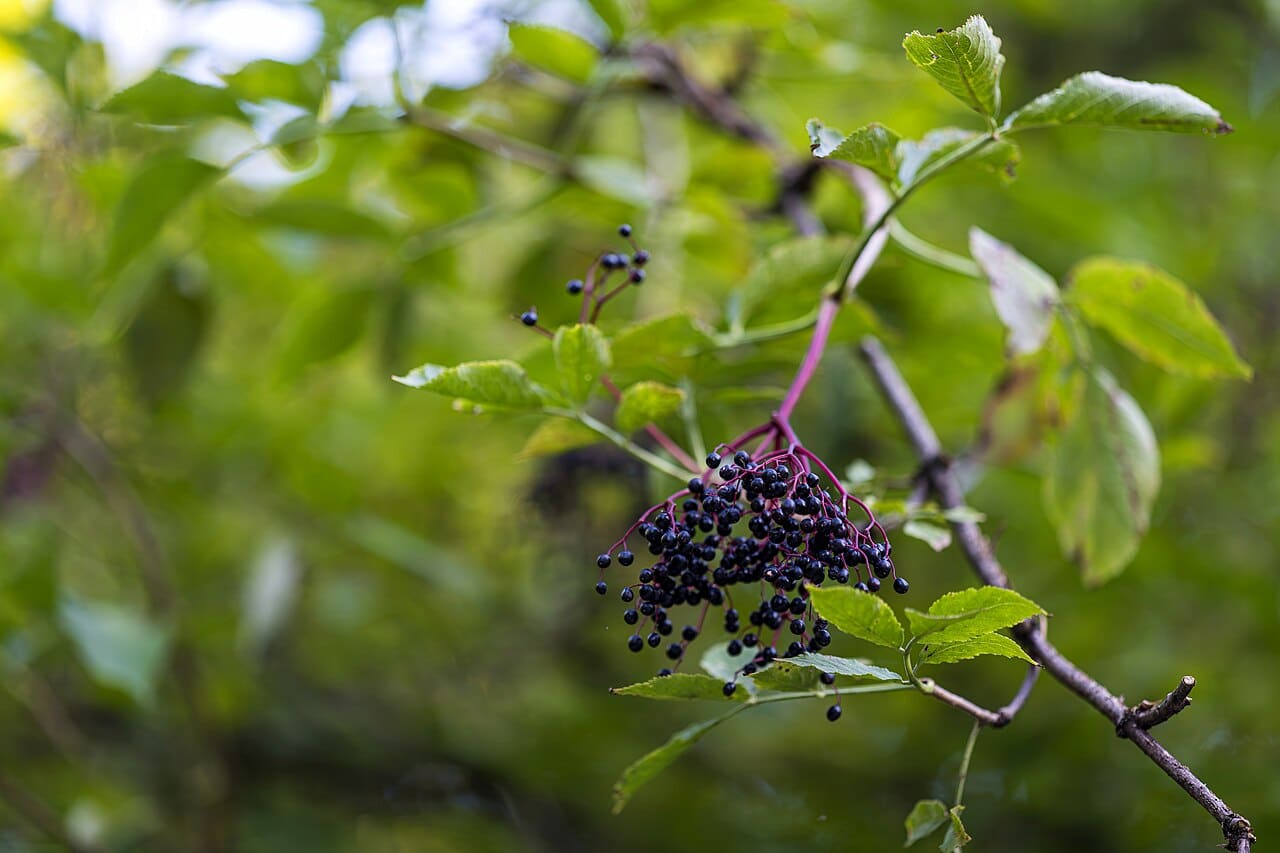
A bramble hedge in the last week of August holds every stage of the year at once: a few late pink flowers, hard green berries, red ones, and the glossy black fruit that comes away at a touch. Next to it, often in the same hedge, an elder bends under flat heads of purple-black berries. Two of the most generous wild harvests in Britain ripen in the same few weeks.
Picking them is one of the simplest kinds of foraging, but it still comes with a few rules: about where, about how much, and in the case of elder about what happens in the kitchen. This piece goes through them in the order they come up on a walk.
What the law says about picking wild fruit
In England and Wales the starting point is the Theft Act 1968. Section 4(3) says that a person who picks mushrooms, or flowers, fruit or foliage from a plant growing wild, does not steal what they pick, even if they are not in possession of the land, unless they do it for reward, for sale or for another commercial purpose. A few handfuls of blackberries for a crumble fall squarely within that.
It is a narrower protection than it sounds. It applies only to plants growing wild, so fruit from a garden, an orchard or a farmed hedge of cultivated fruit is not covered. It covers fruit and foliage, not the plant itself: the Wildlife and Countryside Act 1981 makes it an offence to uproot any wild plant without the landowner’s permission. And it says nothing about access. The right to pick does not create a right to walk onto private land to do it.
Scotland has its own law and traditions on access and foraging, and the rules there differ in detail.
Landowners, reserves and SSSIs
Public footpaths, bridleways and open-access land are the obvious places to pick. Hedges along the edge of a field path, old railway lines turned into walking routes and the scrubby margins of commons tend to be full of brambles and elder.
Nature reserves and protected sites need more care. Sites of Special Scientific Interest are notified by Natural England for particular plants, animals or geology, and landowners need consent for a list of activities that might damage them. Many reserves have byelaws or management rules that forbid removing anything at all. Natural England’s guidance on SSSIs sets out how the designation works, and a sign at the entrance of a reserve is the quickest guide to what is allowed there.
The etiquette is older than the law and mostly common sense. Take a share and leave plenty, because blackberries feed birds, foxes, badgers and late wasps, and elderberries are an important food for migrating thrushes and warblers in autumn. Pick from a few plants rather than stripping one. Avoid the low fruit along busy roads and well-walked dog paths. Follow the Countryside Code: close gates, keep away from livestock, and do not trample crops to reach a promising hedge.
Blackberries: picking well
Blackberries are aggregate fruits of the bramble, a group of closely related species and forms that botanists treat as Rubus fruticosus aggregate. Across Britain there are several hundred microspecies, which is why one hedge gives fat, sweet berries and the next small, seedy, sour ones. Tasting a few before filling a box is the only test that matters.
The first berry to ripen in each cluster is the one at the tip, and it is usually the biggest and sweetest. A ripe berry is fully black, slightly soft and pulls away easily, leaving its core behind. Red or purple berries are not ripe and will not ripen once picked.
Here is the aside. An old piece of British folklore holds that blackberries must not be picked after Michaelmas, the feast of St Michael on 29 September, because on that night the Devil spits (or does something worse) on the brambles. Some versions place the deadline on Old Michaelmas Day, 10 or 11 October. The story probably grew out of a practical truth: late berries in a damp autumn tend to go watery, mouldy and flavourless.
Shallow containers are better than deep bags, because blackberries crush under their own weight. Use them the same day or freeze them.
Elderberries: identifying elder with confidence
Common elder (Sambucus nigra) is a woody shrub or small tree, often three to six metres tall, with grey-brown, corky, deeply furrowed bark on older stems. Its leaves are divided into five to seven toothed leaflets. In June it carries broad flat heads of creamy flowers, the same elderflowers used in cordial, and by late August those heads have turned into heavy clusters of small purple-black berries on red-purple stalks. As the berries ripen the whole cluster droops.
The plant most likely to cause confusion is dwarf elder (Sambucus ebulus), sometimes called danewort. It is poisonous and should not be eaten. Dwarf elder is not woody: it grows as a herbaceous perennial from creeping roots, dies back each winter, and forms dense patches rather than a shrub. Its berry clusters are held upright rather than hanging, and its leaflets are often more numerous and narrower. It is much less common than elder, but it does turn up on roadsides and rough ground in Britain.
Other black berries in hedgerows can cause trouble for anyone picking in a hurry. Deadly nightshade (Atropa belladonna) carries single shiny black berries, each sitting in a green star-shaped calyx; it looks nothing like an elder cluster, yet it grows in the same kind of shady hedge bottoms and woodland edges. Privet, buckthorn and dogwood also carry dark berries in late summer. The rule is the plain one every foraging guide repeats: if there is any doubt about the identity of a plant, leave it alone.
Why elderberries must be cooked
Ripe elderberries are edible only after cooking. Raw berries, and even more so the stalks, leaves, bark and unripe green berries, contain cyanogenic glycosides and other compounds that can cause nausea, vomiting and diarrhoea. Cooking breaks them down. Freezing or drying does not, so frozen or dried berries still need to be cooked before eating.
In practice that means stripping the berries from their stalks (a fork run through the cluster does this quickly, and freezing the heads first makes it easier still), discarding any green or shrivelled ones, and simmering the berries thoroughly in water or with other fruit. Elderberries are never used raw in salads, smoothies or as a garnish.
Getting the harvest home in good order
Wild fruit is more delicate than anything bought in a punnet, and a little care between the hedge and the kitchen makes a real difference. Blackberries start to soften and weep within hours of picking, especially on a warm afternoon, so the box is best kept in the shade and out of a hot car.
At home, tip the berries onto a tray and pick them over. Discard any that are mouldy, crushed or still red, along with stray leaves, thorns and the occasional small insect. Rinse them gently in a colander just before using them rather than as soon as they come in, because wet berries go soft and mouldy far more quickly in the fridge. Spread out in a single layer on kitchen paper, unwashed, they keep for a day or two.
Elderberries need a different routine. The heads should be checked for any green or red berries, which are not ripe and must be removed, along with as much stalk as possible. A fork pulled through each head strips the ripe berries cleanly into a bowl; floating them in a sink of cold water then brings most of the remaining stalks and debris to the surface where they can be skimmed off. Gloves and an apron are worth it, since the juice stains skin, wooden boards and pale worktops for days.
It is worth keeping a note of where the best plants were. A good blackberry patch tends to fruit well year after year, and an elder that gave heavy heads this summer will probably do the same next year, as long as the hedge is not cut in the meantime. Hedge-cutting in late summer and autumn is one reason a reliable patch can vanish suddenly; in England, cutting hedges on farmland is restricted during the main bird-nesting season, from March to August, so work often starts in September.
What to make
Blackberries need almost nothing done to them. Eaten warm from the hedge, folded into yoghurt or scattered on porridge they are already at their best. For a pudding, a blackberry and apple crumble is the classic; it turns vegan simply by using a plant-based block butter or a light oil in the topping and serving it with oat custard. Bramble jelly, made with cooking apples to supply pectin, keeps through the winter.
Elderberries have a tart, slightly earthy flavour and a deep colour that stains everything. Elderberry syrup, simmered with sugar, a few cloves and a strip of lemon peel, is the most common use, and a spoonful in hot water makes a warming autumn drink. Elderberry and apple jelly works well because elderberries are low in pectin. A handful of cooked elderberries also deepens the colour and flavour of a blackberry and apple pie. Recipe sites such as BBC Good Food have versions of most of these.
Both fruits freeze well. Spread blackberries on a tray, freeze them separately, then bag them; they keep their shape for months. Elderberries can be frozen on the stalk and stripped later, as long as they are cooked before use.
Our seasonal calendar on what’s in season lists the cultivated fruit that overlaps with the hedgerow crop, from early apples to the first plums. The wild thyme pages cover another plant often found on the same dry walks, and for anyone looking for a meal out after an afternoon of picking, our guide to vegan dinner in Norwich lists places by type.
A last practical point
Take two containers rather than one. Blackberries go in the shallow one; elderberry heads go in a separate bag or tub, because the juice stains blackberries, hands and everything else. If you are picking with children, the second container also keeps the elder, which must be cooked, apart from the blackberries, which can be eaten on the walk home.
Questions
Is it legal to pick blackberries from a public footpath?
In England and Wales, section 4(3) of the Theft Act 1968 says that picking fruit, flowers, foliage or fungi from a plant growing wild is not theft, provided it is not done for sale, reward or another commercial purpose. That covers a bag of blackberries for the kitchen. It does not give a right to be on private land, and nature reserves and SSSIs may have their own restrictions.
Can elderberries be eaten raw?
No. Raw elderberries, along with the stalks, leaves and unripe green berries, contain compounds that can cause nausea, vomiting and stomach upset. Ripe berries should be stripped from their stalks and cooked thoroughly before eating, for example simmered into a syrup, jelly or pie filling. Cooking breaks down the problem compounds; drying or freezing the berries alone does not.
What looks like elder and is poisonous?
Dwarf elder (Sambucus ebulus) is the main lookalike in Britain. It is a herbaceous plant that dies back to the ground each winter, rarely grows much above head height, and holds its berry clusters upright. Common elder is a woody shrub or small tree with corky bark, and its ripe clusters droop under their weight. Anything uncertain should be left on the plant.
When is the best time to pick blackberries?
Blackberries ripen from late July or August through September, with the berry at the tip of each cluster ripening first and usually being the largest. Dry weather gives the best flavour. Folklore says blackberries should not be picked after Michaelmas at the end of September, and late fruit is often watery or mouldy, so August and early September are the safest weeks.